
























































Level 03 | FOR HIGHER RISK SETTINGS

Physical Intervention Training

Our Level 3 Physical Intervention Programme is designed for organisations where staff face a foreseeable risk of physical harm and may need to intervene safely to protect themselves or others.

Combining advanced communication and de-escalation with a medically reviewed set of safe, proportionate physical skills, every technique is taught within a clear legal and ethical framework – emphasising least restrictive practice, defensible decision-making, and the safety of everyone involved.

 
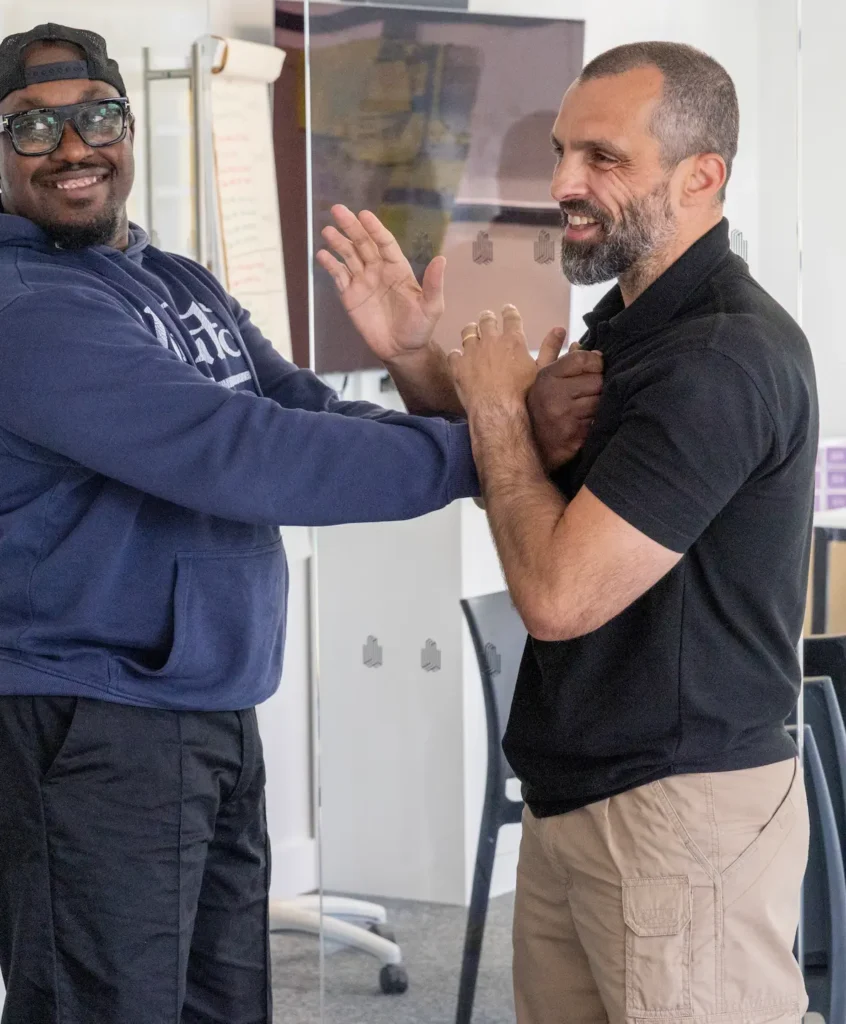
Two men face each other during a hands-on training exercise while three others observe in the background indoors

01Training Overview

Level 3 helps organisations where staff may need to intervene physically to prevent harm and maintain safety.

Level 3 is designed for organisations where staff face a foreseeable risk of physical harm and may be required to intervene safely to protect themselves or others.

Building on the core principles introduced at Level 2, this programme introduces a medically reviewed set of safe, proportionate physical intervention techniques within clear legal, ethical and organisational boundaries. The focus is on helping staff apply the least restrictive response, maintain dignity and reduce the likelihood of harm during higher-risk incidents.

Training follows a structured hierarchy of response that prioritises prevention, communication and de-escalation before any physical action is considered. Staff leave the programme with the knowledge, judgement and practical capability to make defensible decisions under pressure – and to act safely and proportionately when it matters most.

150
k+
People Trained
96
%
Client Retention
25
+
Years Experience
|
02. WHO THIS IS FOR

For staff whose role carries a foreseeable risk of physical harm, where safe physical intervention may genuinely be needed to protect themselves or others.

THIS INCLUDES

  • Checkmark icon Healthcare Staff — Respond safely to challenging behaviour from patients, visitors and families.
  • Checkmark icon Educational Professionals — Manage higher-risk behavioural incidents in schools, colleges and universities
  • Checkmark icon Security & Facilities Teams — Respond appropriately to aggression and safety-related incidents.
  • Checkmark icon Public Transport Staff — Maintain safety during incidents involving disruptive or aggressive behaviour.
  • Checkmark icon Ambulance Services — Manage complex and unpredictable incidents safely while providing clinical care in challenging environments
  • Checkmark icon Probation & Criminal Justice Staff — Respond safely and proportionately to physical aggression while maintaining professional boundaries
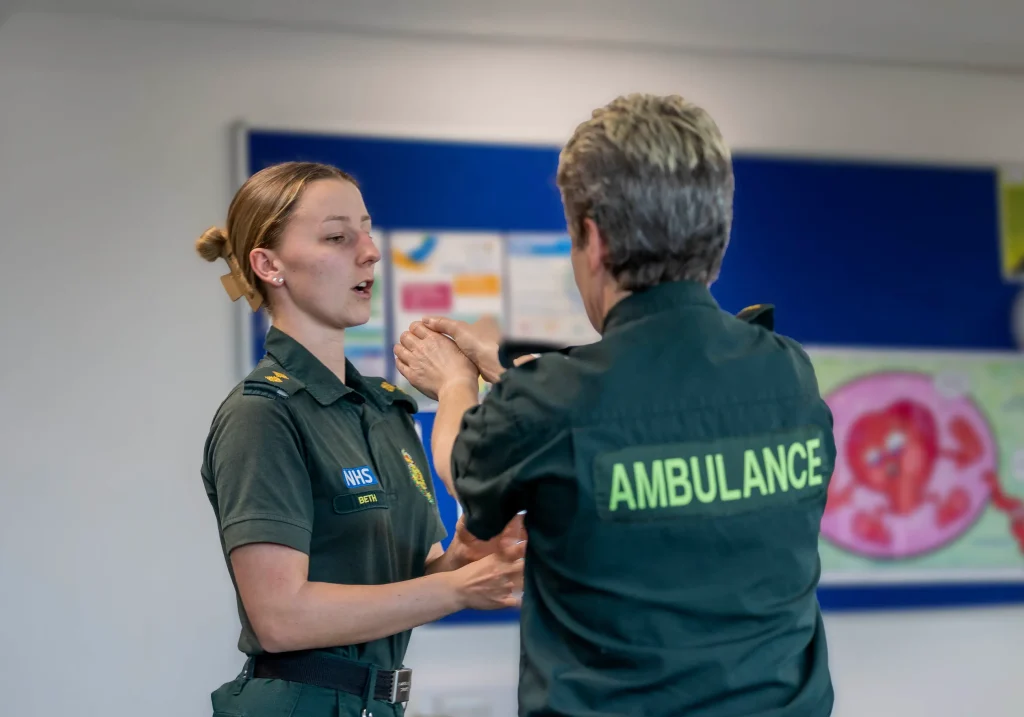
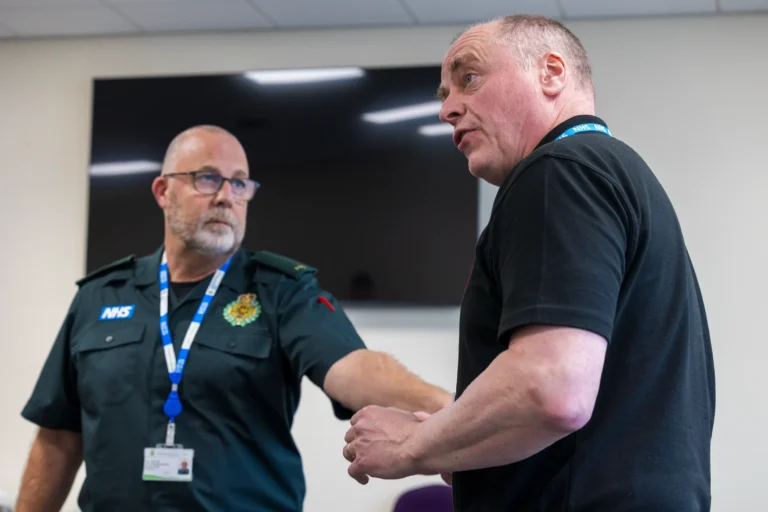
Stand2 trainer with a paramedic
Two men holding hands and dancing together in an ornate ballroom with gilded paintings and pink chairs

03YOUR RISKS ADDRESSED

Our training helps your staff respond safely, legally and proportionately to the risks that arise when physical aggression becomes a foreseeable part of the role, including:

Checklist icon Real risk of injury to staff, service users and members of the public
Checklist icon Unsafe or inconsistent physical intervention practices
Checklist icon Escalation resulting from poor communication or unclear boundaries
Checklist icon Legal, medical, or organisational risk associated with physical intervention
Checklist icon Staff anxiety when faced with high-risk incidents
Checklist icon Incidents involving inappropriate or disproportionate use of force
Checklist icon Ineffective team communication and coordination during critical incidents
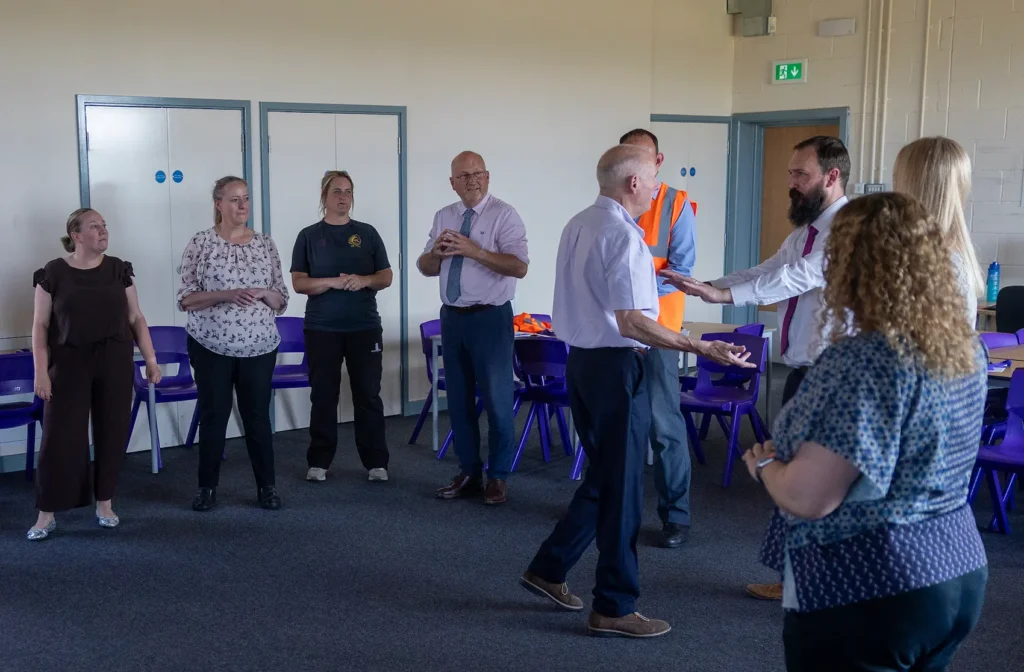
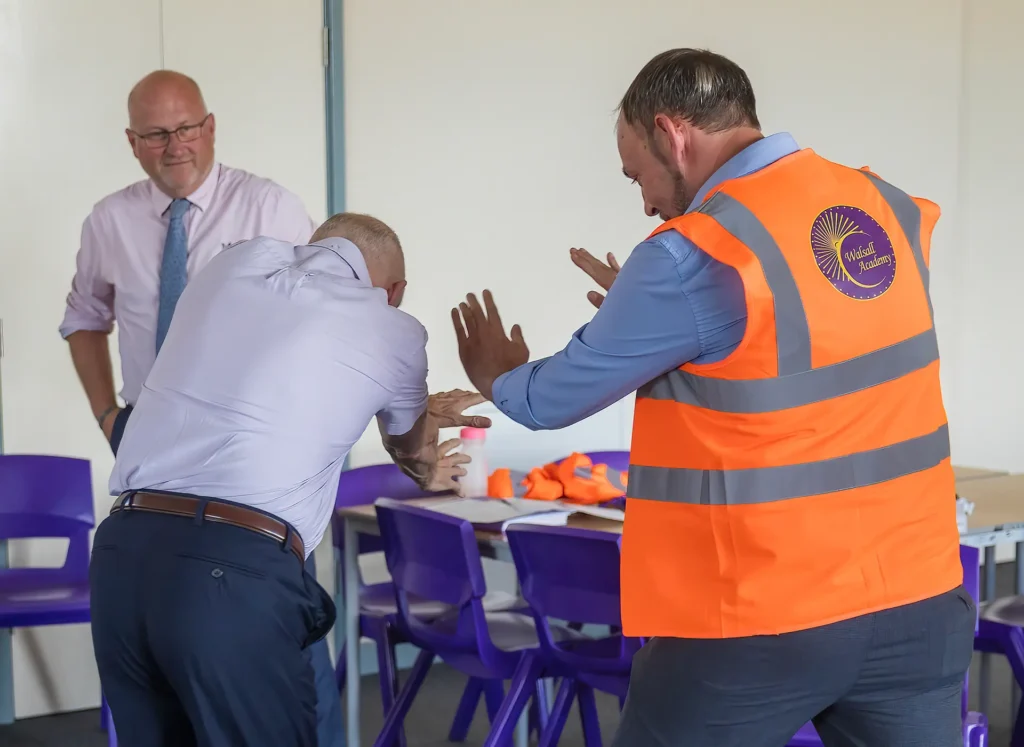
A Walsall Academy staff member in an orange hi-vis vest demonstrates a first aid technique on a man while another man looks on in a classroom

05OUR APPROACH TO TRAINING

Our training is delivered through a blend of practical physical skills, structured decision-making, realistic scenario-based learning and guided reflection.

The approach promotes proportionate, ethical and defensible interventions, with medically reviewed techniques designed to reduce risk while aligning with organisational policies, legal responsibilities and recognised best practice.

All content is tailored following a Training Needs Analysis, allowing us to reflect your environment, workforce and the specific behavioural and safety risks your teams may encounter day to day.

06Frequently Asked Questions

Can’t find what you’re looking for? Get in touch and we will answer any questions you may have!

How do I know if Level 3 is appropriate for our staff?
Level 3 is designed for environments where staff may need to use physical intervention as a last resort to prevent harm. It is most appropriate where there is a foreseeable risk of physical aggression and organisations require a safe, legally defensible approach to managing those situations.
Does Level 3 teach pain-based techniques?
No. We do not teach or endorse pain-based, harmful or non-defensible techniques. All interventions are designed around least-restrictive practice and the safe management of risk.
How do you ensure the physical techniques used are safe?
All techniques are independently medically reviewed and designed around least-restrictive, non-harmful practice. The focus is always on safety, dignity and the wellbeing of everyone involved.
Can training be adapted to our service?
Yes. A detailed Training Needs Analysis ensures all skills and scenarios match your policies, risk profile, and operational expectations.
Is this course compliant with legislation and sector guidance?
Yes. Content aligns with legal requirements, safeguarding expectations, and recognised best practice across regulated sectors.
Do staff need Level 2 before attending?
No. Level 3 assumes no prior knowledge. It includes all the essential foundations – communication, de-escalation, situational awareness, and risk assessment – before introducing any physical skills.
How do you maintain psychological and physical safety during training?
All practical activities are carefully supervised by experienced trainers and delivered within clearly defined safety parameters. Participation is supported through informed consent, clear guidance and appropriate opt-out options where required.
Does this prepare staff for high-risk environments?
Level 3 equips staff with safe, proportionate skills for foreseeable risk. For complex or specialist environments, additional Level 5 Advanced Specialist Skills modules may be appropriate.
How do you ensure physical intervention remains a last resort?
Physical intervention is always taught within a clear hierarchy of response. Staff are trained to prioritise prevention, communication, de-escalation and safe withdrawal wherever possible, with physical intervention only considered when necessary to prevent harm.
07Case Studies
08START YOUR TRAINING TODAY

Let’s find the right training for your organisation.

Tell us a little about your organisation and we’ll make sure we recommend the right training for your environment, your risk level, and your teams. There’s no obligation – just a straightforward conversation with someone who understands your sector.

"*" indicates required fields

It helps to know your sector, roughly how many staff, and the kinds of situations they face – but as much or as little as you like.
We do not use your personal information for any reason other than to contact you back. You can find our privacy policy by clicking here.
Google Reviews

At Stand2 we go above and beyond to understand and meet your expectations. Here are some of our recent reviews.

As the trusted leader in conflict management, personal safety, and physical intervention training, we aim to elevate standards across the UK and beyond by bringing evidence-based practice, operational credibility, and expert instruction to every sector we serve.
View All Reviews
Excellent. Done a few courses over the years regarding conflict management and this was the best. Relaxed teaching and no one was afraid to make a mistake or ask any questions. Enjoyed this much more than my recent SIA renewal in all honesty.

Really thoughtful and experienced teachers. After the training I felt really confident in conflict resolution and physical intervention. Thank you now I know how to protect myself, the general public and my organisation if a situation comes up.

Very well structured course and effectively taught. Techniques and solutions were very helpful.

Very good! Other security companys should learn this Easy to learn


Fantastic course, gave a really easy to remember process for handling conflict management. Trainers were great, I thoroughly enjoyed it.

Really course, tutors were great especially Chris who made it fun and interactive

Really enjoyed the training Dave and Chris are very engaging

Engaging PowerPoint, really good instructors, time to practice techniques

I recently completed training at Stand2 and had a great experience. The course was well organised, engaging and delivered by Chris C, who explained everything clearly using practical, real-life examples. The training has given me greater confidence in managing conflict, assessing risk, and keeping myself and others safe. I would highly recommend this course to anyone looking to develop these important skills.