

News & Resources
What are Five Responsibilities of All Involved During a Physical Intervention
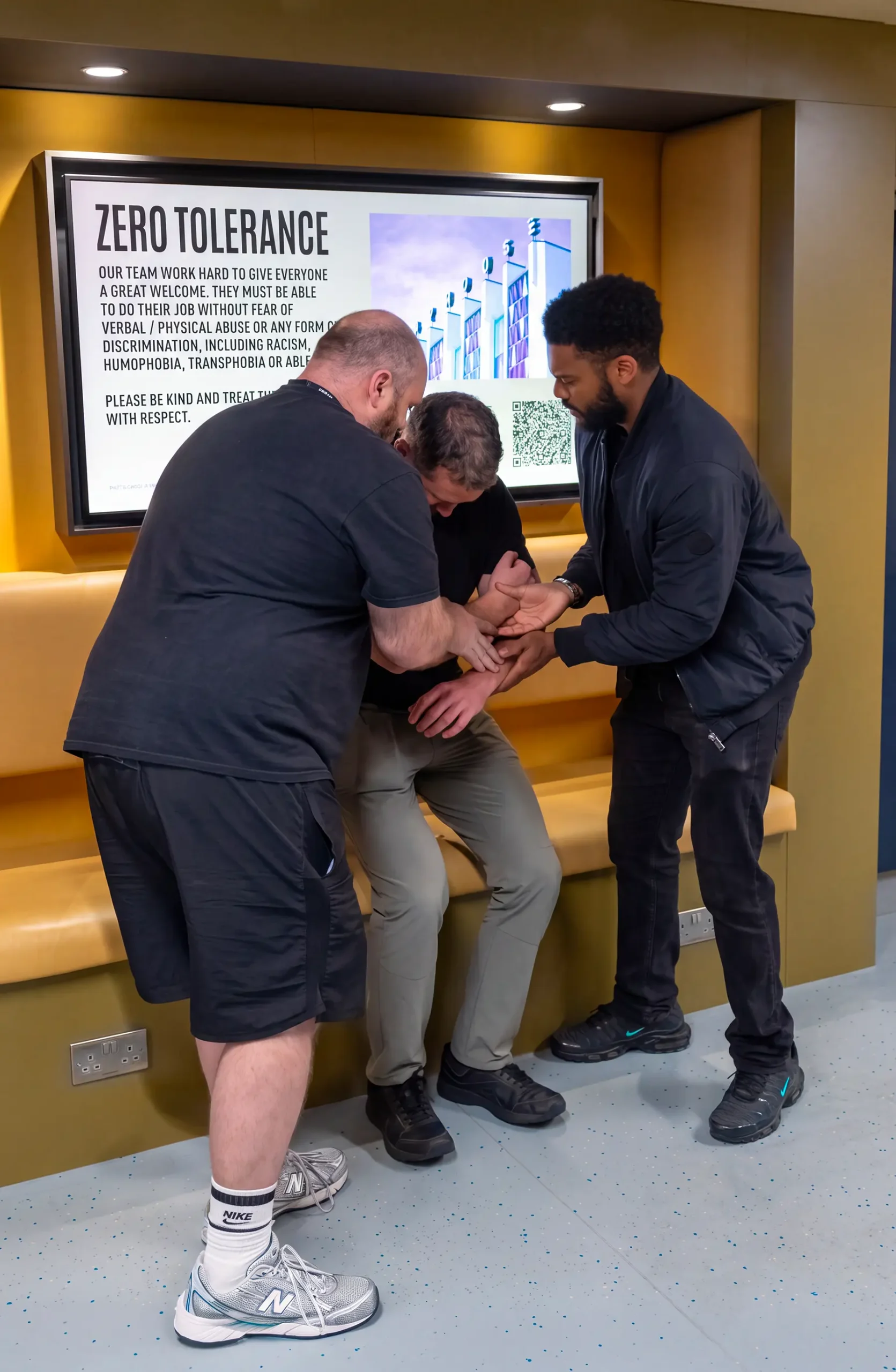
The five responsibilities of all involved during a physical intervention are to coordinate and lead, monitor the person continuously, keep de-escalating, use the minimum force necessary for the shortest time, and observe and record.
- Lead and coordinate. One person takes charge and communicates decisions. Interventions go wrong when two people are working to different plans at the same time.
- Monitor the person continuously. Breathing, colour, responsiveness, and anything said about difficulty breathing are checked throughout - not afterwards. Any sign of distress means releasing immediately.
- Keep de-escalating. Physical contact doesn't end the verbal work. Calm, low-volume communication continues for the duration, and is often what makes an early release possible.
- Use the minimum necessary, for the shortest time. Proportionality is assessed continuously, not settled at the start.
- Observe and record. Someone not involved in the hold should be tracking what happens and when, and keeping others at a safe distance.
These apply while the intervention is happening. Once it ends, a separate set begins - see the six responsibilities immediately following a physical intervention. Both phases are covered on every physical intervention training course Stand2 runs.




 01952 928134