

News & Resources
What Are Six Responsibilities That Should Be Taken Immediately Following a Physical Intervention?
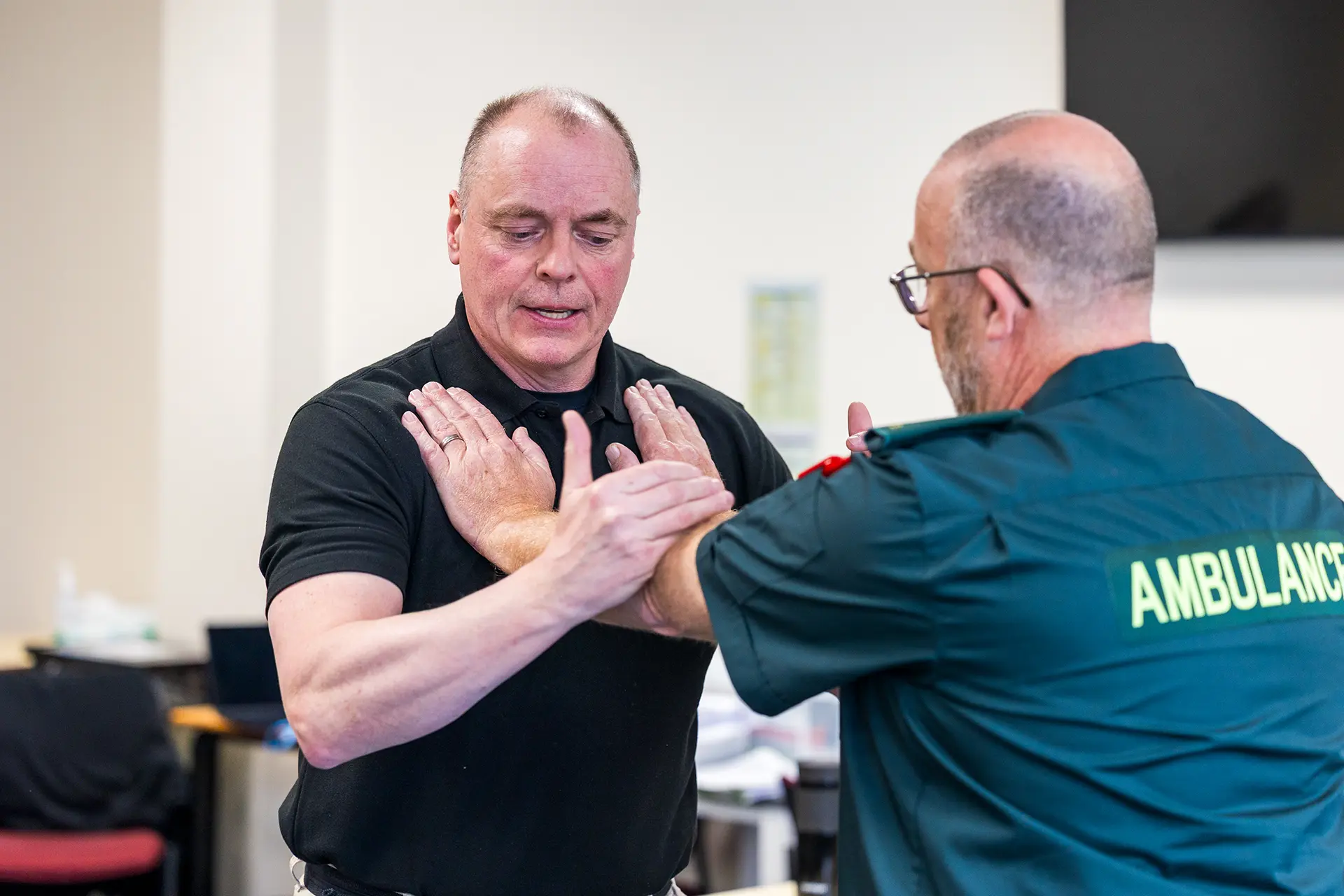
Immediately after a physical intervention ends, staff carry six core responsibilities: de-escalate safely, maintain duty of care, provide medical attention where needed, brief relevant authorities, preserve evidence, and complete a full incident report.
None of these are optional extras - they're what separates defensible practice from a liability risk.
How should you manage and monitor a person's safety during physical intervention?
Safety is monitored continuously from the moment a hold starts, not just once it ends. In practice that means:
- One person leads - a single member of staff talks to the person and coordinates the team.
- Watch breathing and colour - look for laboured breathing, changes in skin colour, or the person going quiet or limp.
- Keep pressure off the chest, back and neck - avoid any weight that restricts breathing, and avoid face-down holds wherever possible.
- Listen and act - if the person says they can't breathe or shows signs of distress, release or change the hold immediately.
- Keep it as short as possible - use the least restrictive hold for the shortest time, and reduce it as soon as it's safe.
The six responsibilities
- De-escalate safely - release or reduce the hold at the earliest safe opportunity, never longer than necessary.
- Maintain duty of care - continue monitoring the person's physical and emotional state after release.
- Provide medical attention - check for injury or distress, and get professional medical help immediately if required.
- Brief relevant authorities - inform emergency services, management, or medical staff of what happened, including duration and any complications.
- Preserve evidence - secure the scene, protect physical evidence, and note any witnesses present.
- Report fully - complete a detailed, independent written incident report covering every action taken.
These responsibilities apply regardless of which type of physical intervention was used, and they're a legal and professional expectation, not a formality.
Free Three-Minute Check
Are your staff protected? Check your duty of care.
Fourteen questions, scored against HSE guidance. You get a red, amber or green rating for each area and the three things to fix first. No sign-up.
What are the professional implications of using physical intervention?
Using physical intervention has consequences for the member of staff who used it, not just the person who was held. Five professional implications to be aware of:
- Legal accountability - force must be lawful, necessary and proportionate. Going beyond that can lead to criminal charges or civil claims.
- Disciplinary action - an employer may investigate, suspend or dismiss staff who didn't follow policy or training.
- Licence or registration - for SIA licence holders and registered professionals, misuse of force can put that licence or registration at risk.
- Reputation - for the individual and the organisation, especially where footage is shared.
- Personal impact - injury, stress and the strain of a post-incident investigation.
Post-incident procedure is built into every Stand2 physical intervention course, including our physical intervention security training - covering not just the physical skills, but the reporting and review process that follows.
These reporting standards apply across all of Stand2's physical intervention training, whichever sector-specific course your team attends.
For Frontline Teams
Physical Intervention Training
Teaches staff to use physical intervention safely, monitor the person throughout and handle the reporting that follows. See what’s covered and how to book.
- 1 or 2 days
- Medically reviewed
- Delivered at your site
- Refresh every 12 months




 01952 928134
