

News & Resources
What Are the Three Main Types of Physical Intervention?
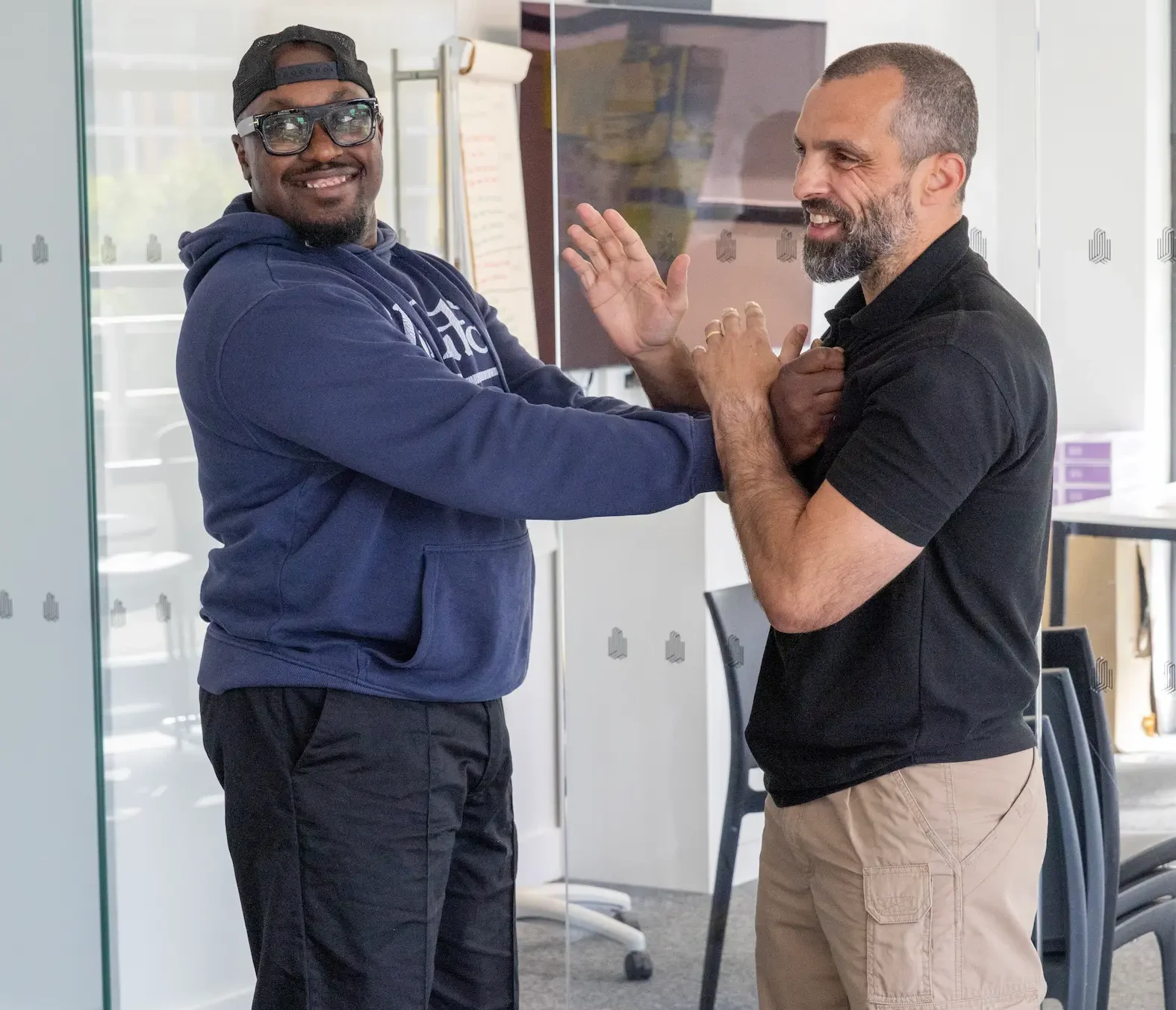
Physical intervention is generally broken down into three main types: direct physical contact, the use of barriers to limit movement, and materials or equipment that restrict movement. This breakdown is most consistently used in UK safeguarding and behaviour-management guidance, but the same three categories apply wherever physical intervention training is delivered.
Direct physical contact - This is the most familiar type: a staff member physically guiding, holding, or supporting someone to prevent harm. Examples include guiding someone away from a hazard, holding an arm to stop self-harm, or two staff members supporting someone to a seat if they're highly agitated. This ranges from very light-touch guidance right up to more restrictive holds, depending on the level of risk.
Barriers that limit movement - This means using the physical environment itself, rather than direct contact, to restrict where someone can go. Examples include closing or holding a door, or positioning furniture so a room is harder to access. It's a way of managing risk without touching the person at all.
Equipment or materials that restrict movement - This covers anything designed specifically to limit motion, from mobility aids being temporarily withheld for safety reasons, to specialist equipment used in higher-risk settings. This category is used far less often than the other two and typically requires specific training and organisational sign-off.
An important distinction that runs through all three: everyday supportive touch - a reassuring hand, physical guidance to complete a task, a hand on the shoulder — is not the same as physical intervention. Physical intervention specifically means restricting someone's movement against their resistance. That's the line that determines whether training, risk assessment, and incident recording requirements apply.
A note on lawfulness: what makes physical intervention reasonable and proportionate differs by sector - schools, healthcare settings, and security roles each sit under different legal frameworks. Always follow your own organisation's policy and training rather than a general rule of thumb.
Our Level 3 Physical Intervention training covers this full continuum - from safe direct-contact techniques through to when (and whether) physical intervention is the right response at all — tailored to your sector's specific risks and legal context.




 01952 928134