

News & Resources
When there is no tree: why adaptable training saves lives
Some years ago, I was at a seminar delivered by Major Avi Nardia - a former trainer for an Israeli counter-terrorist unit and one of the most thoughtful people I have encountered in a lifetime spent in operational training. Avi was demonstrating a series of techniques when another instructor interrupted him.
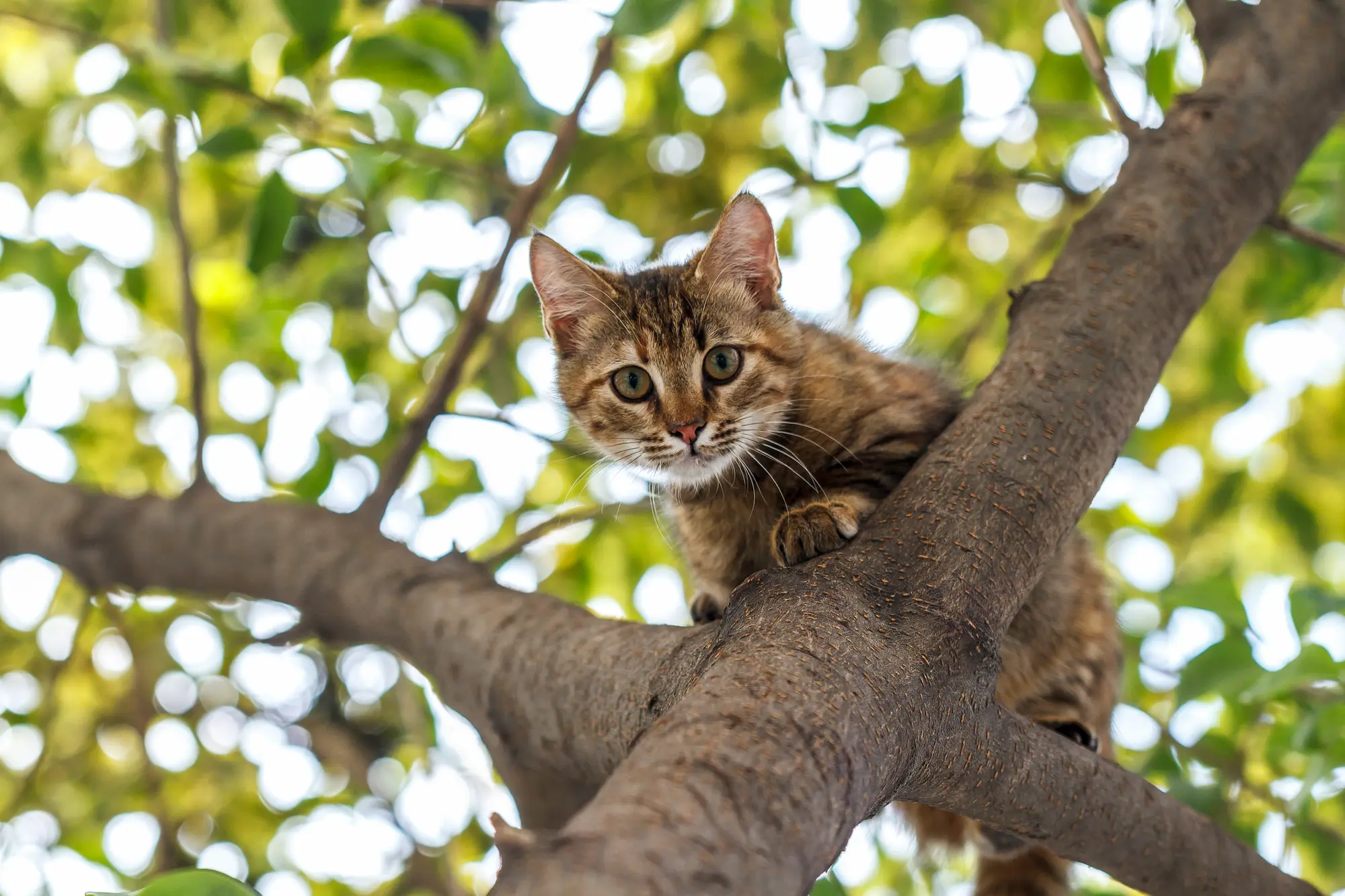
The interruption led to a story. A cat and a buffalo encounter a crocodile. The buffalo tries to gore it and is killed. The cat runs up a tree and escapes. The next day, the cat and an elephant encounter a hunter. The elephant charges and is shot. The cat runs up a tree. Escapes again.
The instructor's point was simple: give students one reliable response. Under stress, choices create hesitation. Hesitation gets people hurt. One answer. Act. Survive.
He finished the story, clearly satisfied.
Avi listened. Paused. Then asked one question.
"What if there is no tree?"
The case for simple responses - and its limits
The instructor was not wrong. He had identified something important.
When I was a Police Officer Safety Trainer and later a National Public Order Tactical Advisor with West Mercia Police, I trained officers to manage violence in some of the most unpredictable environments policing has to offer. And I learned early that under genuine stress, not training room stress, but the real thing - people do not perform well when they are trying to remember a complex menu of options.
Stress narrows thinking. People fall back on what is most deeply ingrained - or they freeze.
A colleague once asked me how many techniques I knew. I answered honestly: thousands. Then he asked how many I used. The answer was five - one for each category of problem I was most likely to face. When something happened fast and there was no time to think, those five responses were ready. Stimulus. Response. No deliberation required.
That is valuable. That is the foundation.
But it is only the foundation.
What the cat story misses
The problem with the one-response model is what happens when the response fails.
And it will fail. Not because the training was poor, but because reality is not a training drill.
The person in front of you is not your training partner. They do not move the way the scenario assumed. The environment is different. You are tired, or surprised, or off-balance. There is no room to do what you practised. The space is too small. There is more than one threat. There is no tree.
Research into skill decay in first responders confirms that cognitive tasks decay faster than physical tasks, and open-loop tasks - those involving real-time situational assessment and decision-making - decay faster than closed-loop tasks with fixed, predictable steps. Conflict management and physical intervention sit firmly in the open-loop category. The situation changes constantly. The person in front of you does not follow a script.
A meta-analysis covering 53 studies and 189 data points found that there is substantial skill loss with nonpractice or nonuse, with skill loss ranging from negligible immediately after training to an effect size of 1.4 after more than 365 days of non-use. That is a significant deterioration - and it applies to both the technical skills and the decision-making frameworks that effective conflict management requires.
What adaptability actually requires
Here is what I have observed across thirty years of training in policing, military environments, healthcare, probation, and the private sector.
Students trained on a single response often perform well in the scenario they trained for. But when that scenario changes, and it always changes, they are exposed. They may freeze at the moment of failure. They may escalate unnecessarily because they have no intermediate option. Or they may abandon all training and revert to pure instinct, which is rarely what keeps people safe.
Students who have been trained to understand principles, not just techniques, respond differently. When the first response does not work, they adapt. They are not thrown by the unexpected because they understand what they are trying to achieve, not just how to achieve it in one specific way.
This is the difference between training that teaches moves and training that teaches thinking.
Mike Tyson put it simply: "Everyone has a plan until they get punched in the mouth." The point is not that planning is futile. It is that plans must be flexible enough to survive contact with reality.
At Stand2, our programmes are built around this distinction. Whether we are working with ambulance crews managing violent patients, probation practitioners visiting high-risk offenders in the community, or security teams protecting sensitive sites, the goal is the same: staff who can act decisively when action is needed and adapt intelligently when the situation changes.
That requires both elements - the reliable core response, deeply practised, and the understanding of principles that allows adaptation when the first answer fails.
The skill fade problem
There is a further dimension that training providers rarely discuss honestly.
Even well-trained people lose capability over time. The General Medical Council's review of the evidence confirms that skills decline over periods ranging from six to eighteen months, with a steeper decline at the outset and a more gradual decline as time passes. For physical and decision-making skills in high-pressure environments, that decline has real consequences.
This matters because many organisations train staff once and consider the obligation met. It is not. A member of staff who received conflict management training two years ago and has not practised since is not the same as a member of staff who trained last month. Their confidence may be unchanged. Their capability is not.
This is one of the reasons Stand2 builds refresher training into its programmes as a standard expectation, not because regulations require it in every context, but because the evidence requires it. Training that is not refreshed is training that fades. In environments where physical intervention may be necessary, that fade has consequences for staff safety, service user safety, and organisational liability.
A note on who teaches this
The principles described here are not theoretical. They come from operational experience - from policing, from military service, from years of standing in rooms with people who face genuine violence as part of their working day.
Stand2's training team includes former Royal Marine Commandos, Royal Engineers, specialist firearms officers, prison service instructors who served on national incident response teams, and professionals with backgrounds in close protection, covert operations, and counter-terrorism. Between them, they bring decades of experience in the kinds of environments where training either works or it doesn't - and where the difference matters.
When Stand2 talks about what holds up under pressure, it is drawing on that experience directly.
Final thought
The cat in the story is clever. Its one reliable response works well enough, most of the time.
But the world is not always full of trees.
Train people to act. Train them to react. And train them, over time, to adapt - because the moment that tests them will not look exactly like the drill.
Paul Brennan is the Managing Director and co-founder of Stand2, with over 30 years of experience in conflict management, personal safety, and physical intervention training across policing, military, and public and private sector environments. Stand2 delivers specialist training to NHS trusts, ambulance services, probation services, and organisations across the UK and internationally.




 01952 928134