

News & Resources

How Do You Assess Risks for Lone Workers?
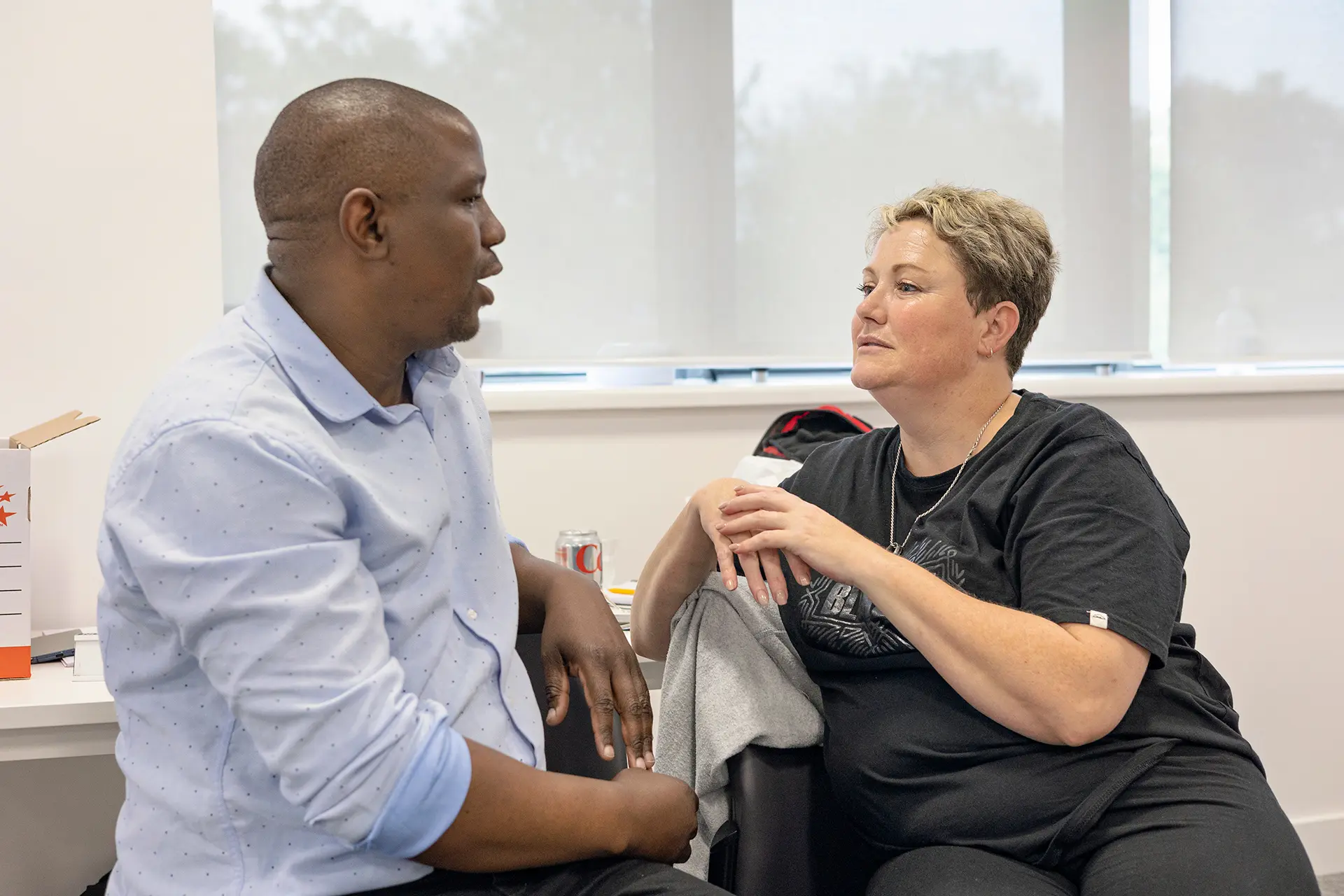
Two people seated and engaged in a focused conversation in an office or clinical setting

A practical lone-worker risk assessment usually works through four steps, in line with HSE's guidance on managing the risks of working alone: identify which tasks, shifts or locations involve someone working without a colleague present; evaluate the specific hazards for each (violence, medical emergencies, remote or late-night locations); decide on proportionate controls (check-in procedures, panic alarms, buddy systems for the highest-risk tasks); and review it regularly rather than treating it as a one-off document.

For home visits specifically, that four-step model needs an extra layer: property and person-specific checks each time, not just a generic annual policy. Does this address have any recorded history of aggression, weapons, or dangerous animals? Is a second person needed for this particular visit rather than a routine solo one? What's the specific check-in and escalation process if the visit runs over time or contact is lost? Home-visit risk genuinely changes address by address and visit by visit - a once-a-year risk assessment misses that, which is why dynamic, per-visit judgement matters as much as the paperwork behind it.

The control that gets skipped most often is training.

The control that gets skipped most often is training. A check-in system tells you if something's gone wrong - it doesn't help a member of staff recognise a situation escalating early enough to prevent it, or know how to disengage safely if it does. That's the gap our Lone Worker Safety training is built to close - for transport staff and housing and local authority teams alike.

See the full range of support for transport services teams or housing and local authority teams.

Written by Stand2
Google Reviews

At Stand2 we go above and beyond to understand and meet your expectations. Here are some of our recent reviews.

As the trusted leader in conflict management, personal safety, and physical intervention training, we aim to elevate standards across the UK and beyond by bringing evidence-based practice, operational credibility, and expert instruction to every sector we serve.
View All Reviews
Excellent. Done a few courses over the years regarding conflict management and this was the best. Relaxed teaching and no one was afraid to make a mistake or ask any questions. Enjoyed this much more than my recent SIA renewal in all honesty.

Really thoughtful and experienced teachers. After the training I felt really confident in conflict resolution and physical intervention. Thank you now I know how to protect myself, the general public and my organisation if a situation comes up.

Very well structured course and effectively taught. Techniques and solutions were very helpful.

Very good! Other security companys should learn this Easy to learn


Fantastic course, gave a really easy to remember process for handling conflict management. Trainers were great, I thoroughly enjoyed it.

Really course, tutors were great especially Chris who made it fun and interactive

Really enjoyed the training Dave and Chris are very engaging

Engaging PowerPoint, really good instructors, time to practice techniques

I recently completed training at Stand2 and had a great experience. The course was well organised, engaging and delivered by Chris C, who explained everything clearly using practical, real-life examples. The training has given me greater confidence in managing conflict, assessing risk, and keeping myself and others safe. I would highly recommend this course to anyone looking to develop these important skills.