























































Level 01 – De-Escalation
Managing Challenging Telephone Calls Training
A focused, practical course for staff who handle distressed, frustrated or verbally aggressive callers, building the confidence and composure to manage high-emotion calls well.
- In person
- Standpoint
- Affiliated Trainer Programme
- OBSERVATION
- PARTICIPATION
- DISCUSSION

•01COURSE OVERVIEW
Calm, confident call handling under pressure.

Without visual cues, tension on the phone is easy to misread and quick to escalate. This course builds the communication skills call handlers need to manage distressed, frustrated and abusive callers safely.
Staff learn to spot early escalation cues, use proven de-escalation techniques, set clear boundaries and make proportionate decisions in line with your procedures.
How this training helps your organisation
-
Clear, consistent standards for call handling
-
Fewer escalations and complaints from difficult calls
-
Clearer difficult messages and boundary setting
-
Better call control in line with your procedures
-
More confident staff with less call-related stress
-
Better incident recording for safeguarding and audit
•03.RISKS ADDRESSED
Phone conflict is easy to underestimate. Without training, staff may:
The good news? It’s entirely preventable.
What staff will learn.
- 01 Recognise and manage the three types of risk.
- 02 Identify the early verbal and behavioural indicators of frustration, distress, and escalation during calls.
- 03 Use clear, concise, and professional language to reduce ambiguity and prevent misunderstandings.
- 04 Apply structured communication techniques that support deescalation and maintain control of the interaction.
- 05 Manage high emotion callers using evidence-based approaches that reduce tension and promote co-operation.
- 06 Apply ‘transactional analysis’ principles to communicate effectively under pressure.
- 07 Set and maintain appropriate boundaries while delivering difficult or unwelcome information.
- 08 Recognise different types of challenging caller behaviour and adapt their approach accordingly.
- 09 Make proportionate, defensible decisions when faced with escalating or aggressive behaviour.
- 10 Maintain personal composure and emotional regulation under pressure.
- 11 Follow organisational procedures for escalation, safeguarding, and emergency response.
- 12 Record and report incidents accurately to support organisational learning and risk management.
- 13 Reflect on their own communication style and identify opportunities for continuous improvement.
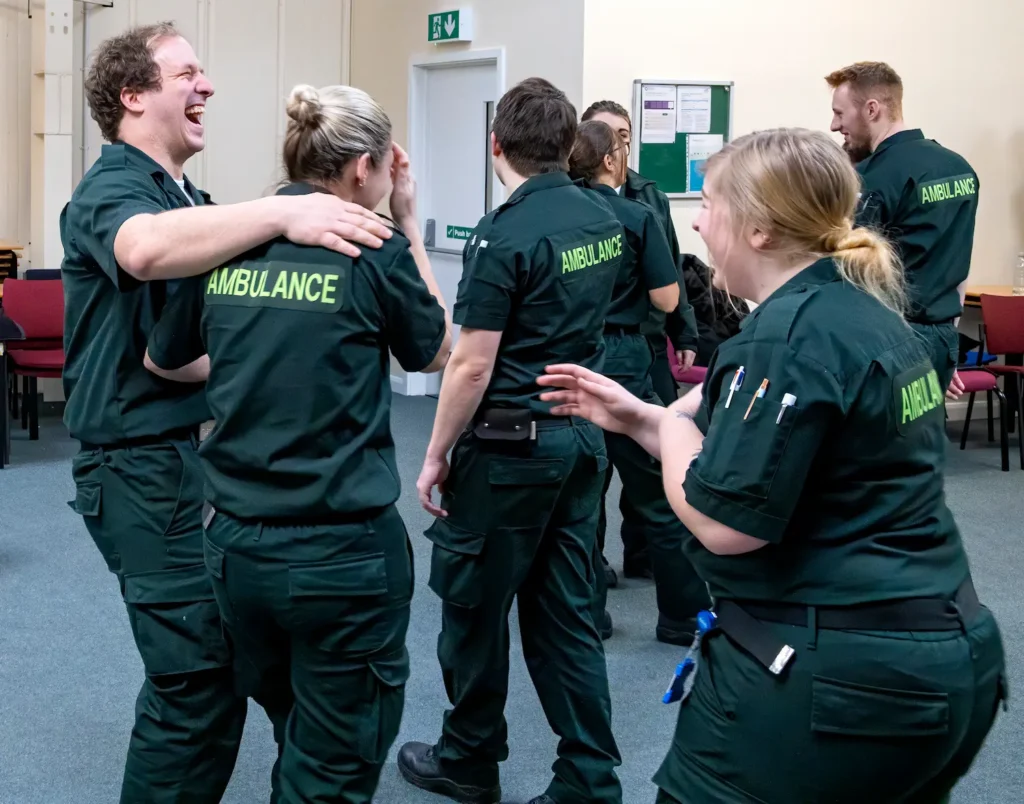
Northern Ireland Ambulance Service call handling teams
Stand2 delivered training to call handlers across the Northern Ireland Ambulance Service, supporting staff who manage a high volume of distressing, emotionally charged, and time critical calls. These teams frequently deal with callers experiencing pain, fear, acute distress, or frustration linked to emergency response times, clinical outcomes, or service pressures.
The training focused on strengthening call control, improving clarity under pressure, and reducing escalation during high emotion interactions. Following the programme, staff reported increased confidence in managing complex caller behaviours, clearer communication when delivering difficult or time sensitive information, and greater consistency across teams.
Built around how call handlers actually work.
Delivery: In person, through discussion, communication exercises and realistic call scenarios built around your caller profiles and escalation procedures, with extra resources on StandPoint.
Assessment: Continuous and practical, through observation and simulated call scenarios. No written exams.
Certification: Every successful participant receives a uniquely numbered Stand2 certificate and is added to the Stand2 Training Register, giving you an auditable record of who’s trained and when refreshers are due.
Training environment: Trauma-informed throughout. No one is asked to do anything they’re uncomfortable with, and it suits all experience levels.
Telephone calls training: your questions answered
Is this course suitable for staff who work exclusively on the phone?
Does the course cover managing repeat or persistent aggressive callers?
Is telephone conflict management training a legal requirement?
What sectors is this course suitable for?
How does this training help organisations reduce complaint volumes and call escalation?
Can the scenarios be built around our specific call types?
Does Stand2 training come with a certificate?
How do you ensure the training is psychologically safe for participants?
Does this course align with our organisational call handling procedures?
How often should call handlers refresh this training?
Let’s talk about training your team.
Ideal for teams who handle challenging or high-emotion callers. Tell us about your team and we’ll recommend the right approach.
"*" indicates required fields