
Level 02 – Conflict Management

Conflict Management & Personal Safety for Healthcare

A structured programme for healthcare staff who may encounter challenging behaviour or potential aggression from patients, visitors, or families – where a foreseeable risk of physical harm exists. Designed to build confidence, situational awareness, and proportionate, defensible responses under the pressure of a clinical environment.

Delivered to NHS trusts and ambulance services across the UK for over 25 years.

 
Duration 6 Hours
Delivery Methods
  • In person
  • Standpoint
  • Affiliate Trainer Programme
Assessments
  • OBSERVATION
  • PARTICIPATION
  • DISCUSSION
  • COACHING
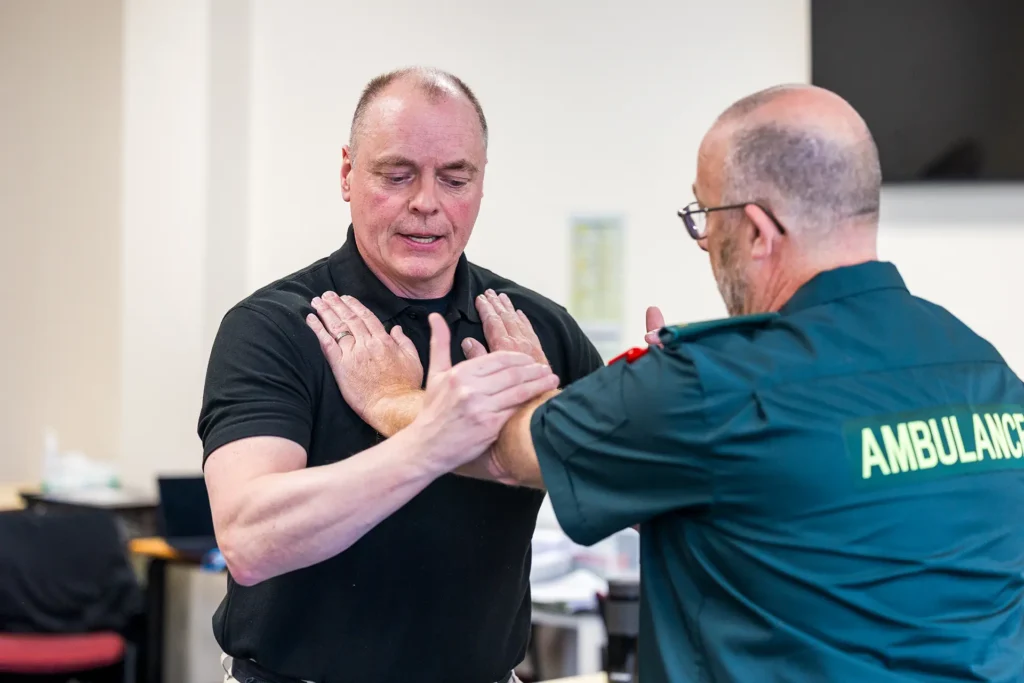
Ambulance worker and a man practicing a physical restraint technique during a training session

01COURSE OVERVIEW

Developing the communication, situational awareness, breakaway and personal safety skills healthcare staff need to prevent, manage, and respond to challenging behaviour in clinical environments.

Participants learn to recognise escalation early – whether it’s driven by pain, distress, confusion, or intoxication – apply structured de-escalation strategies, and make proportionate decisions that are professionally and legally defensible. The course introduces safe, low-level breakaway options and withdrawal principles while reinforcing clear ethical boundaries and organisational responsibilities within a healthcare setting.  

By the end of the programme, staff are equipped to maintain personal safety, uphold professionalism, and support safer outcomes for patients, colleagues, and visitors across higher-pressure clinical environments.

02 HOW THIS TRAINING HELPS

How this training helps your organisation

  • More confident clinical and non-clinical staff who can manage patient and visitor aggression without escalating the situation
  • Reduced incidents and clearer communication during emotionally heightened clinical encounters
  • More consistent, defensible decision-making aligned with NHS policy, safeguarding procedures, and professional standards (NMC, GMC, HCPC)
  • Improved staff safety and reduced anxiety when managing unpredictable patient behaviour, intoxication, or distress
  • Better incident reporting to support safeguarding reviews, regulatory investigations, and organisational learning
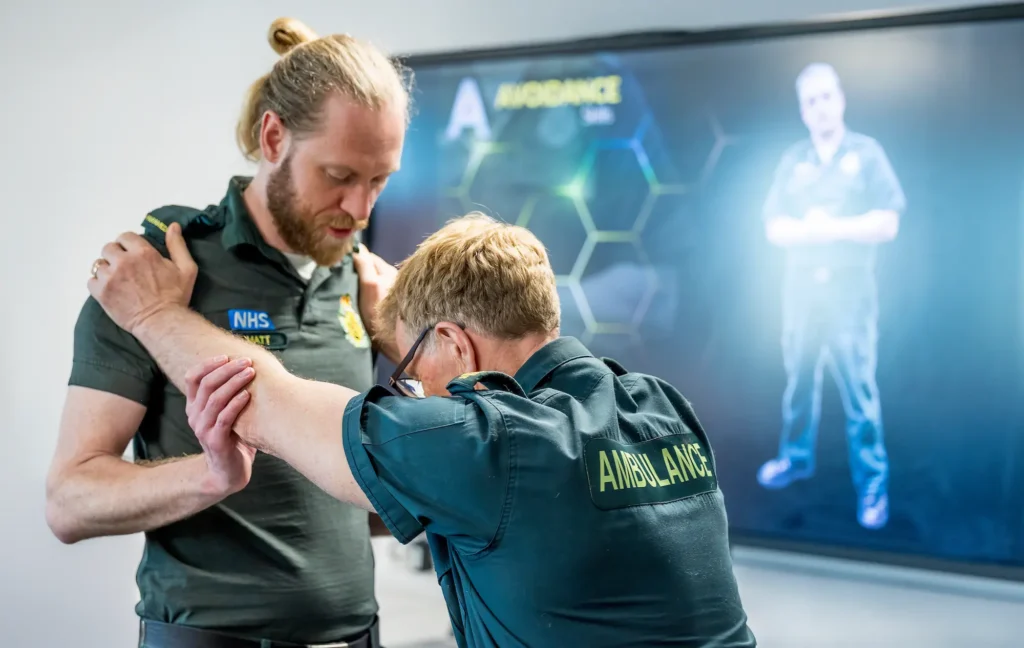
Paramedics pushing

03.RISKS ADDRESSED

When verbal aggression can turn physical, the risks are too high to leave to chance. Without the right training, your staff may:

Checklist icon Misjudge early warning signs in patients affected by pain, confusion, intoxication, or mental health crisis – missing the chance to de-escalate before it turns physical
Checklist icon Rely on inconsistent or non-defensible responses during high-pressure clinical encounters, increasing exposure if the incident is later reviewed by a coroner, safeguarding panel, or regulator
Checklist icon Place themselves, patients, or colleagues at increased risk by withdrawing unsafely from a ward, treatment room, or community visit
Checklist icon Escalate situations unintentionally through unclear communication with a distressed patient, family member, or visitor
Checklist icon Fail to adapt to the unpredictable realities of clinical environments – differing wards, differing patient presentations, differing levels of support available
Checklist icon Under-report incidents, limiting your Trust’s or organisation’s ability to identify patterns, meet violence-reduction reporting expectations, and mitigate risk

The good news is that this is entirely preventable. That’s what this course is for.

04 LEARNING OUTCOMES

Here’s what your staff will be able to do differently:

Recognise and manage the three types of risk. 
04 LEARNING OUTCOMES

Here’s what your staff will be able to do differently:

  1. 01 Recognise and manage the three types of risk. 
  2. 02 Recognise early behavioural and environmental indicators of escalating conflict.
  3. 03 Demonstrate effective situational awareness and dynamic risk assessment before and during encounters.
  4. 04 Apply structured, evidence-based communication techniques to reduce tension and maintain control of interactions.
  5. 05 Set and maintain professional boundaries that support safety and reduce the likelihood of escalation.
  6. 06 Describe the hierarchy of responses, emphasising prevention, deescalation, and last resort physical contact.
  7. 07 Maintain professional standards during conflict.
  8. 08 Make proportionate, defensible decisions when faced with challenging or aggressive behaviour.
  9. 09 Understand the legal, ethical, and organisational frameworks that guide safe and appropriate responses.
  10. 10 Perform low-level breakaway skills designed to release from common, low risk grabs or holds and create safe space to withdraw.
  11. 11 Use physical skills in a controlled, proportionate manner consistent with training, policy, and the principles of least restrictive practice.
  12. 12 Implement safe withdrawal strategies and know when to disengage or seek support.
  13. 13 Work effectively as part of a team.
  14. 14 Record and report incidents accurately to support safeguarding, organisational learning, and risk management.
  15. 15 Reflect on their own responses and identify opportunities for continuous improvement in both communication and personal safety practice.
05 CASE STUDY

South East Coast Ambulance Service – Frontline Ambulance Clinicians

Stand2 delivers training to South East Coast Ambulance Service NHS Foundation Trust’s. It’s staff work in emergency and urgent care environments where distress, aggression, and unpredictable behaviour from patients or bystanders can lead to challenging encounters, both on scene and during transit. 

Training has strengthened staff confidence in recognising and evaluating threats early, communicating effectively with people who are highly emotional or distressed, and applying safe breakaway techniques when a situation escalates. Clinicians and volunteers report greater confidence managing conflict without compromising the calm, professional standard of care patients rely on.

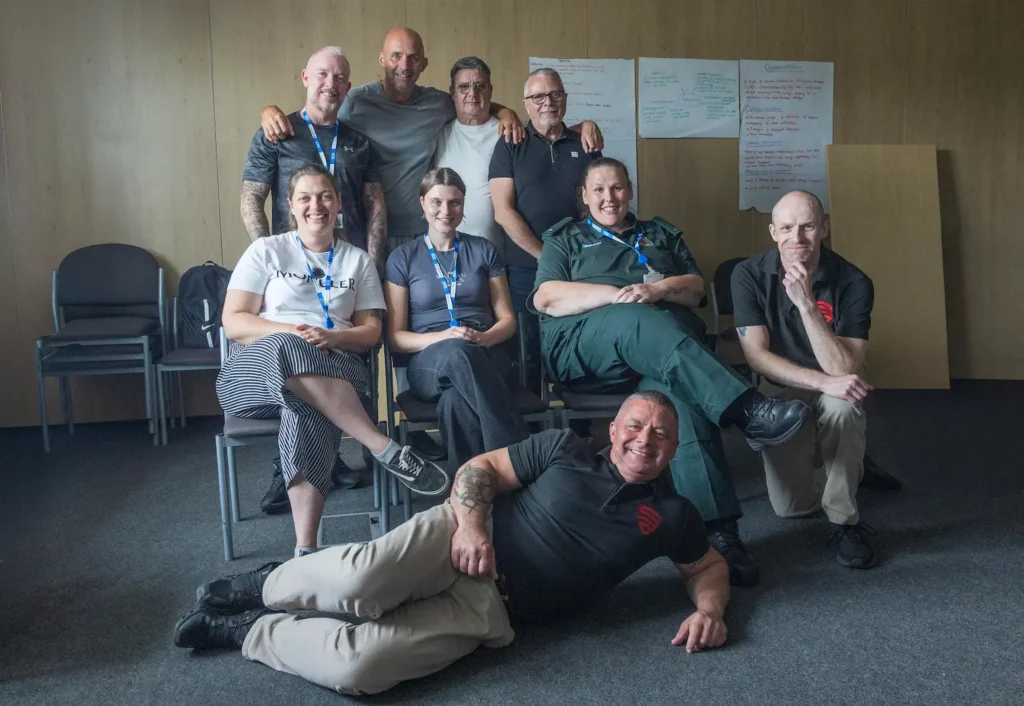
Woman laughing
06 Course Delivery & Assessment

Training that’s built around the environments your staff actually work in – and the risks they actually face.

Delivery: This course is delivered in person through a blend of structured discussion, practical communication exercises, scenario-based examples, and supervised breakaway activities. Every session is built around your organisation’s specific environment, policies, and the real situations your staff encounter. StandPoint, our online learning platform, supports the programme with additional resources and materials.

Assessment: Learning is assessed through observation, participation, and demonstration of key principles in practical exercises. There are no formal written exams – assessment is continuous, realistic, and based on how staff apply what they’ve learned.

Certification: Every participant who successfully completes the programme is formally certified by Stand2, receiving a uniquely numbered certificate that confirms they have met the programme’s assessed standards. Each delegate is entered onto the Stand2 Training Register, which we maintain on your behalf – giving your organisation a clear, auditable record of who has been trained and when refresher training is due.

Training environment: All sessions are delivered using trauma-informed practice with clear opt-out options, ensuring both psychological and physical safety throughout. Practical elements are low-risk and fully aligned with medical and organisational standards. No participant is asked to take part in any activity they are uncomfortable with.

07.Frequently asked questions

Can’t find what you’re looking for? Call us or drop us a message.

Does this course include physical intervention?
Only low-level breakaway and safe withdrawal options are included. The programme teaches staff how to release from common grabs or holds and create safe space to withdraw – not how to physically restrain or control others. Full physical intervention is covered at Level 3.
What is the difference between this course and Level 1?
Level 1 focuses on communication and de-escalation in lower-risk environments where physical harm is unlikely. This Level 2 programme builds on those foundations and introduces personal safety skills – including breakaway techniques and safe withdrawal – for environments where a foreseeable risk of physical harm exists. Prior Level 1 training is helpful but not required.
Is personal safety and conflict management training a legal requirement for healthcare organisations?

Employers have a legal duty under the Health and Safety at Work Act 1974 to assess and manage foreseeable risks to their staff, and healthcare organisations carry additional obligations under CQC regulation and the professional standards set by bodies including the NMC, GMC, and HCPC. Where staff may face verbal aggression that could escalate to physical harm – a routine reality in many clinical environments – appropriate training is one of the most direct control measures available, and one regulators and coroners increasingly expect to see in place.

Is this course suitable for both clinical and non-clinical healthcare staff?

Yes. This course is suitable for any healthcare role where staff encounter challenging behaviour in an environment with a foreseeable – if not frequent – risk of physical aggression, including ward-based clinical staff, community health teams, non-clinical support staff, and reception or administrative teams. It is not appropriate for roles where physical aggression is a regular and significant risk, such as high-acuity mental health or emergency settings – those environments require Level 3 training.



Does this course include breakaway training?
Yes. Breakaway techniques and safe withdrawal are a core part of this programme, taught alongside de-escalation and risk assessment for clinical environments. This is sometimes called PMVA-style breakaway training in the NHS – we don’t teach it as a stand-alone module; see below for why.
Is this the same as PMVA breakaway training?
PMVA (Prevention and Management of Violence and Aggression) is simply the term many NHS mental health and acute trusts use for this type of training. Stand2’s Level 2 programme covers the same breakaway and safe disengagement principles within our TACT 360 framework, tailored to your clinical setting and staff group.
Why don't you teach breakaway training as a stand-alone course?
Because breakaway is a personal safety skill, not an isolated technique. Clinical staff who have the underlying awareness, positioning and de-escalation skills this course builds rarely need to use a breakaway at all – and when they do, it works far better as part of a coherent response than as a move learned in isolation. The realities of a ward, clinic or community visit are broader and more nuanced than any single technique, which is why breakaway is taught as one integrated part of a complete personal safety system.
Are the breakaway techniques suitable for all staff regardless of age or fitness level?
Yes. The breakaway and safe withdrawal techniques taught on this programme are low-risk, biomechanically sound, and designed to be accessible to staff of all ages, fitness levels, and physical abilities – including clinical staff with no physical intervention background. They are not strength-dependent – they rely on correct technique, positioning, and timing rather than physical force. All practical elements are closely supervised, delivered within a trauma-informed framework, and fully aligned with medical and organisational standards.
Can the scenarios be built around our specific clinical environment?
Yes. Every Stand2 programme is built around your organisation’s specific policies, risk profile, and the real situations your staff face – whether that’s a ward, an outpatient clinic, a community visit, or a reception desk. Where helpful, we carry out a Training Needs Analysis beforehand to ensure the content, scenarios, and practical exercises directly reflect your clinical environment.
Does Stand2 training come with a certificate?
Yes. Every participant who successfully completes the programme is formally certified by Stand2 and issued with a uniquely numbered completion certificate. Each delegate is also entered onto the Stand2 Training Register, which we maintain on your behalf — providing your organisation with a clear, auditable record of who has been trained and when refresher training is due.
How do you ensure the training is clinically safe and appropriate for participants?
All sessions are delivered using trauma-informed practice with clear opt-out options. Practical activities – including breakaway techniques – are closely supervised, independently medically reviewed, and fully risk assessed by a NEBOSH-level health and safety practitioner. No participant is asked to take part in any activity they are uncomfortable with, and both psychological and physical safety are prioritised throughout – including for staff who may themselves have experienced trauma or serious incidents at work.
Will this training stand up to scrutiny from regulators, coroners, or internal investigations?
Yes. Where necessary, we work with you beforehand to understand your policies, escalation routes, and service expectations – ensuring the programme is fully aligned with your organisational procedures, safeguarding responsibilities, and defensible if a decision is later reviewed by a safeguarding panel, regulator, or coroner’s inquest.
How often should staff refresh this training?
Stand2 recommends a refresher interval of 24 months for this programme. The refresher course follows the same 6-hour format as the initial programme. Stand2 will proactively notify you when your staff are approaching their refresher date through the Stand2 Training Register.
08.Start the conversation

This course is ideal for organisations where staff manage challenging behaviour and require a defensible, proportionate approach to both communication and personal safety.

If you’re responsible for staff safety, operational risk, or service delivery, we can  help.

"*" indicates required fields

It helps to know your sector, roughly how many staff, and the kinds of situations they face – but as much or as little as you like.
We do not use your personal information for any reason other than to contact you back. You can find our privacy policy by clicking here.
Google Reviews

At Stand2 we go above and beyond to understand and meet your expectations. Here are some of our recent reviews.

As the trusted leader in conflict management, personal safety, and physical intervention training, we aim to elevate standards across the UK and beyond by bringing evidence-based practice, operational credibility, and expert instruction to every sector we serve.
View All Reviews
Excellent. Done a few courses over the years regarding conflict management and this was the best. Relaxed teaching and no one was afraid to make a mistake or ask any questions. Enjoyed this much more than my recent SIA renewal in all honesty.

Really thoughtful and experienced teachers. After the training I felt really confident in conflict resolution and physical intervention. Thank you now I know how to protect myself, the general public and my organisation if a situation comes up.

Very well structured course and effectively taught. Techniques and solutions were very helpful.

Very good! Other security companys should learn this Easy to learn


Fantastic course, gave a really easy to remember process for handling conflict management. Trainers were great, I thoroughly enjoyed it.

Really course, tutors were great especially Chris who made it fun and interactive

Really enjoyed the training Dave and Chris are very engaging

Engaging PowerPoint, really good instructors, time to practice techniques

I recently completed training at Stand2 and had a great experience. The course was well organised, engaging and delivered by Chris C, who explained everything clearly using practical, real-life examples. The training has given me greater confidence in managing conflict, assessing risk, and keeping myself and others safe. I would highly recommend this course to anyone looking to develop these important skills.