
























































Level 02 – Conflict Management

Breakaway Training Course

Breakaway training course for staff who could be grabbed, held or pushed at work. Your team learns simple, low-risk ways to release and get to safety, built on the conflict skills that stop most situations getting that far.

Six hours, delivered face to face at your site.

Duration 6 Hours
Delivery Methods
  • In person
  • Standpoint
  • Affiliate Trainer Programme
Assessments
  • OBSERVATION
  • PARTICIPATION
  • DISCUSSION
  • COACHING
Conflict management training

•01COURSE OVERVIEW

What our breakaway training course covers

Most people grabbed at work are caught off guard: a hand on the wrist at reception, a grip on clothing at a door. Staff need a simple way to break free, and the judgement to leave.

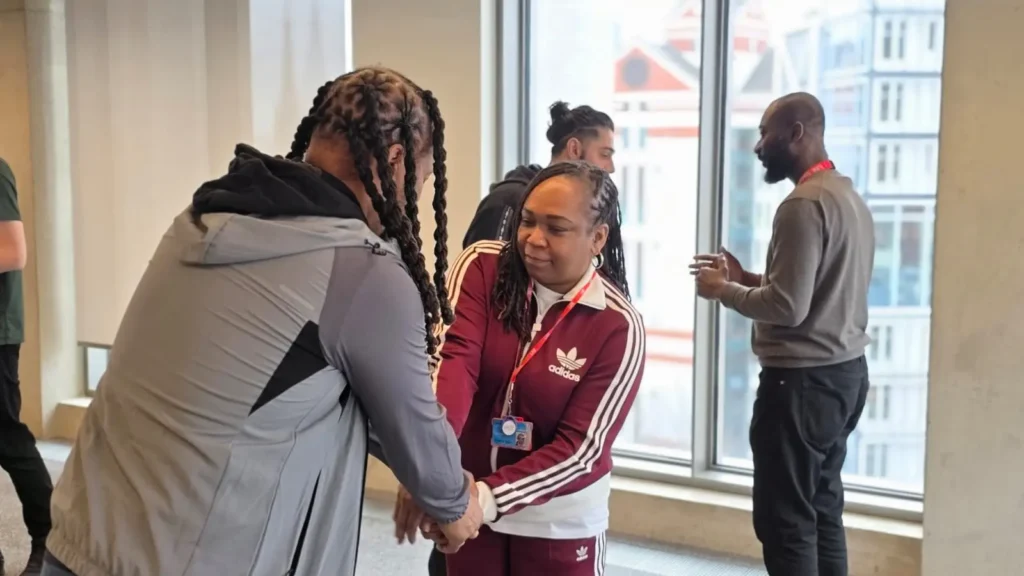
The course starts with spotting warning signs and calming situations down. Staff then learn a few low-risk releases from wrist, clothing, hair and neck holds that need no strength, and practise them in scenarios set in your workplace.

It teaches staff to get away and get help, not to hold or restrain anyone.

• 02 THE IMPACT

How this breakaway training helps your organisation

  • Staff who know what to do if grabbed
  • Fewer incidents turning physical
  • A clear record of your duty of care
  • Techniques that suit any size or fitness
  • Less anxiety on difficult shifts
  • Proportionate decisions staff can justify
Wrist grabbing training

•03RISKS ADDRESSED

Without a breakaway training course, staff who are grabbed may:

Checklist icon Freeze, or pull against someone stronger
Checklist icon Lash out and injure someone
Checklist icon Stay in a room they should have left
Checklist icon Get cornered with no way out
Checklist icon Wait for help nobody has called
Checklist icon Play incidents down, leaving the risk for the next person

The good news is that this is entirely preventable. That’s what this course is for.

• 04 LEARNING OUTCOMES

What staff will learn.

Recognise and manage the three types of risk. 

• 04 LEARNING OUTCOMES

What staff will learn.

  1. 01 Recognise and manage the three types of risk. 
  2. 02 Spot the signs that someone is about to become physical, and act before they do.
  3. 03 Keep a safe distance and position themselves with a clear way out.
  4. 04 Use calm, structured communication to bring tension down.
  5. 05 Choose the least physical response that keeps them safe.
  6. 06 Safely release from a range of grabs.
  7. 07 Move away from a push or a strike and create space to leave.
  8. 08 Withdraw safely and get to a place of safety or help.
  9. 09 Understand reasonable force in law, and explain why their response was proportionate.
  10. 10 Support a colleague and use agreed signals to call for help.
  11. 11 Work effectively as part of a team.
  12. 12 Recognise the effect an incident can have on them and know where to get support.
  13. 13 Record and report an incident accurately so risks can be reviewed.
  14. 14 Reflect on their own responses and identify opportunities for continuous improvement in both communication and personal safety practice.
05 CASE STUDY

Forestry England – Personal safety across 1,500 forests

Forestry England staff work everywhere from busy visitor centres and car parks to remote woodland trails, often alone. Most encounters with the public are positive, but car park disputes and enforcement conversations were leaving some staff facing abusive and frustrated people far from help.

Stand2 built a programme around those real locations, from car park confrontations to encounters on the trails, with lone working woven through every session. Staff reported more confidence and less anxiety about confrontations, and the organisation now has one consistent approach to personal safety across its whole estate.

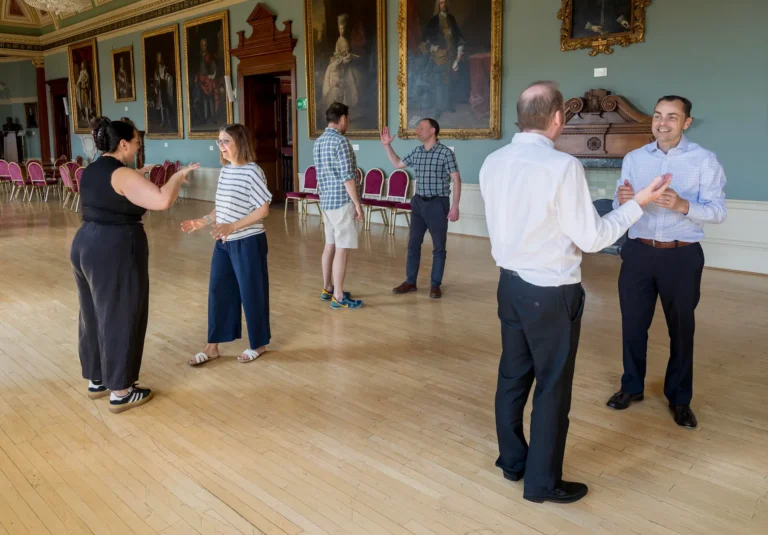
Training in the guildhall
• 06 Course Delivery & Assessment

Delivered at your site, built around your workplace

Delivery: Face to face at your site, with releases practised in the rooms, corridors and doorways your staff actually work in. Up to 12 staff per trainer.

Assessment: No written test. Trainers coach each person through every release and sign off what they can do.

Certification: A uniquely numbered Stand2 certificate for each delegate, plus a place on the Stand2 Training Register so you know when refreshers are due.

Training environment: Trauma-informed and low-risk, with a clear opt-out at any point.

•07Frequently asked questions

Breakaway training for staff: your questions answered

What is a breakaway training course?
It teaches staff simple ways to release from a grab or hold and get to safety, alongside the communication skills that prevent most incidents. It does not teach holding or restraining anyone.
Is breakaway training mandatory?
No law names it. But employers must assess the risk of violence to staff and put reasonable controls in place. Where staff could be grabbed or assaulted, a breakaway training course is a practical control that shows you have acted.
Does the course include restraint or physical intervention?
No. Staff learn to get away, not to hold someone. Teams who may need to restrain or guide a person need our separate physical intervention training.
How long is the course?
Six hours, usually run as one day at your site.
Do staff need to be fit or strong?
No. The releases rely on leverage and body position, not strength, so they suit staff of any size, age or fitness. Trainers adapt movements for anyone with an injury or health condition.
Is it suitable for lone workers?
Yes. Lone workers have no one to step in, so getting away matters even more. For staff who mostly work alone, we also run a dedicated Lone Worker Safety course.
Is this the same as self-defence?
No. Self-defence often teaches striking back. A breakaway training course teaches the least force needed to escape, which is easier to justify and safer for everyone involved.
Can staff use these techniques legally?
Yes, when the force is reasonable and proportionate. The course explains what that means and how staff can explain their actions afterwards.
How many staff can attend, and do they get a certificate?
Up to 12 per trainer. Everyone who completes the course gets a uniquely numbered Stand2 certificate and goes on the Stand2 Training Register.
How often should staff refresh breakaway training?
Every two years. Physical skills fade without practice, so some teams refresh sooner.
•08.Start the conversation

Let’s talk about training your team.

Ideal where staff could face physical aggression but aren’t expected to intervene. Tell us about your team and we’ll recommend the right approach.

"*" indicates required fields

It helps to know your sector, roughly how many staff, and the kinds of situations they face – but as much or as little as you like.
We do not use your personal information for any reason other than to contact you back. You can find our privacy policy by clicking here.
Google Reviews

At Stand2 we go above and beyond to understand and meet your expectations. Here are some of our recent reviews.

As the trusted leader in conflict management, personal safety, and physical intervention training, we aim to elevate standards across the UK and beyond by bringing evidence-based practice, operational credibility, and expert instruction to every sector we serve.
View All Reviews
Great session on conflict resolution. Session was informative and helpful for managing situations of conflict. Would highly recommend.

Brilliant course! Instructors (Steve and Dave) friendly and knowledgeable, made everyone feel really comfortable. Wonderful overall experience and know have a better knowledge of conflict resolution techniques.

Good training, helpful for increasing awareness of threats and process for justifying and processing conflict resolution.

Great experience practical elements really helped consolidate my knowledge.

The instructors were very knowledgeable, approachable and supportive. Great and informative session, thank you!


Excellent delivery, really informative & engaging, cannot fault the whole package. Thank you

Great training and was delivered to a high standard. Paul was very friendly and made me feel at ease

Very useful in practical life, specifically in my workplace.