






















































Level 01 – De-Escalation

De-escalation Training
for Bar Staff

De-escalation and conflict resolution training for bar staff that gives your team the confidence to refuse service, manage drunk or angry customers and keep the room calm. Practical, half-day sessions delivered face to face at your venue, at a time that works around trading.

Duration 4 Hours
Delivery Methods
  • In person
  • Standpoint
  • Affiliated Trainer Programme
Assessments
  • OBSERVATION
  • PARTICIPATION
  • DISCUSSION
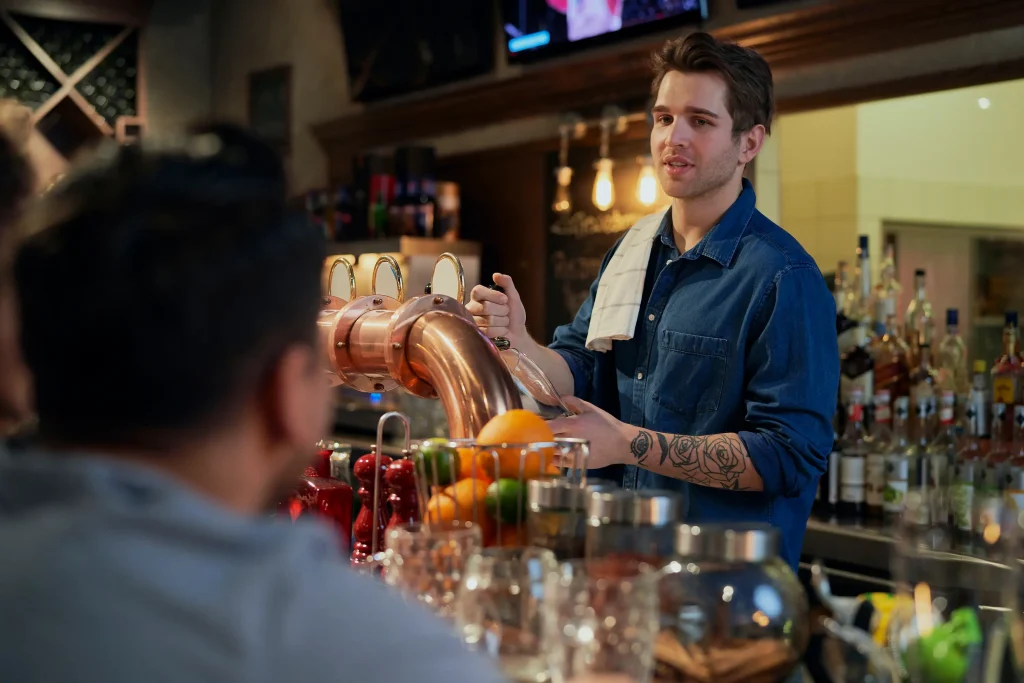
a man pulls a pint behind a bar

•01COURSE OVERVIEW

What our de-escalation training for bar and pub staff covers

Most conflict in a bar starts small. A customer is refused a drink, told it’s last orders, or asked to wait. How the member of staff handles the next thirty seconds decides whether it ends there or turns into an incident. Our training focuses on those moments.

Your team learns to read customers and the room early, spot the signs of intoxication and frustration before they build, and use clear, calm communication to keep control. They practise refusing service, managing closing time and asking people to leave in ways that protect the customer’s dignity and their own safety. The session is built around your venue, your policies and the situations your staff actually face, from a quiet local pub to a busy late-night bar.

• 02 THE IMPACT

How this training helps your venue

  • Confident, consistent refusals.
  • Fewer incidents that escalate.
  • Stronger licence position.
  • Better incident records.
  • Staff who feel supported.
  • A calmer venue.
bar fight

•03.RISKS ADDRESSED

Behind a bar, small moments become incidents quickly.

Bar and pub staff deal with alcohol, crowds and late hours, often while serving and with little backup. Without training, well-meaning staff can make things worse.

Checklist icon Arguing with a drunk customer in front of their friends, who then join in
Checklist icon • Refusing service in a way that embarrasses someone and turns it personal
Checklist icon • Mixed messages at last orders, with one server giving in after another said no
Checklist icon • Young or newly recruited staff left to handle trouble alone on a busy shift •
Checklist icon • Harassment of staff brushed off until it becomes a complaint or a resignation
Checklist icon • Incidents that go unrecorded, leaving the venue exposed if questions are asked later

None of this is inevitable. With the right skills, most situations can be calmed before they escalate.

• 04 LEARNING OUTCOMES

Learning outcomes: what your team will be able to do

Recognise and manage the three types of risk.
• 04 LEARNING OUTCOMES

Learning outcomes: what your team will be able to do

  1. 01 Recognise and manage the three types of risk.

  2. 02 Avoid common causes of bias.
  3. 03 Recognise early indicators of distress, frustration, and escalating behaviour.
  4. 04 Assess risk dynamically and make proportionate, defensible decisions during challenging encounters.
  5. 05 Apply structured communication techniques to reduce tension and maintain control of interactions.
  6. 06 Use clear, professional language that supports de-escalation and reduces ambiguity.
  7. 07 Apply 'transactional analysis' principles to communicate effectively under pressure.
  8. 08 Set boundaries and deliver difficult messages without increasing conflict.
  9. 09 Adapt their approach to suit different behavioural presentations, contexts, and service environments.
  10. 10 Implement safe, ethical, and organisation aligned strategies for managing aggression.
  11. 11 Recognise the potential emotional impact of challenging interactions and access appropriate post incident support
  12. 12 Record and report incidents accurately to support organisational learning and safeguarding.
  13. 13 Reflect on their own responses and identify opportunities for continuous improvement.
  14. 14 Maintain personal composure and emotional regulation under pressure.
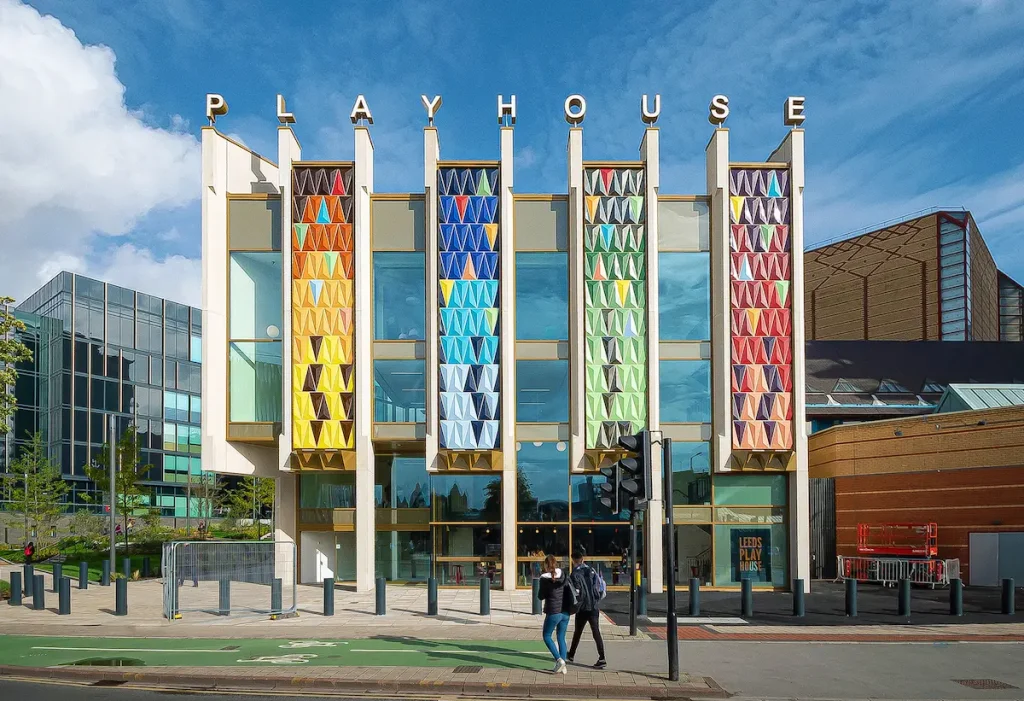
leeds playhouse outside
05 CASE STUDY

Leeds Playhouse – From the Theatre to the Bar

Leeds Playhouse welcomes large audiences through its foyers, bars and auditoriums. Its security team is often the first to step in when a customer becomes frustrated, intoxicated or confrontational, usually in front of other guests. Stand2 trained the team on a two-day course built around the venue’s own spaces and policies.

The focus was on recognising escalation early, communicating calmly under pressure and resolving incidents with words wherever possible. Physical skills were taught only as a last resort, within the same decision-making framework.

A woman in a blue top speaks with a colleague in a modern office, with other coworkers conversing in the background
• 06 Course Delivery & Assessment

Delivered at your venue, built around your bar.

Delivery: Face to face at your venue, with scenarios built around your bar, your policies and your busiest moments. Supporting materials sit on StandPoint, our online learning platform.

Assessment: No written exams. Trainers assess staff as they go, through observation, participation and practical communication exercises.

Certification: Everyone who completes the course gets a uniquely numbered Stand2 certificate and goes on the Stand2 Training Register, so you know who is trained and when refreshers are due.

Training environment: Trauma-informed, with no pressure to join in anything uncomfortable. Suitable for new starters and experienced staff alike.

•07.Frequently asked questions

Can’t find what you’re looking for? Call us or drop us a message.

Is de-escalation training a legal requirement for bar staff?
No law names it specifically. But licensed venues must promote the licensing objectives, avoid selling to drunk customers and protect staff from violence and harassment. Training is one of the most practical ways to show you are meeting those duties.
How should staff refuse service to someone who is drunk?
Early, privately where possible, and without blame. Staff learn how to explain the decision, offer an alternative such as water or a soft drink, and hold the line if the customer pushes back.
Does the course cover physical intervention or door work?
No. It covers communication and de-escalation only. Staff who manage ejections or face a higher risk of assault should attend our Level 2 course.
Can you train our team outside opening hours?
Yes. We deliver at your venue and can schedule sessions before opening or on quieter days.
How many staff can attend?
Up to 12 per trainer. For larger teams we can add trainers or run more than one session on the same day.
Does it help with Ask for Angela and preventing harassment?
Yes. The course covers how staff respond when they or a customer are being harassed. Read more in our article on hospitality safety beyond Ask for Angela.
How often should staff refresh this training?
We recommend a refresher every three years. Venues with high staff turnover should train new starters as they join.
Do your trainers have DBS checks?
Yes, all our trainers hold DBS checks.
Do staff get a certificate?
Yes. Everyone who completes the course receives a uniquely numbered Stand2 certificate and is added to the Stand2 Training Register.
•08.Start the conversation

Tell us about your venue and your team, and we’ll recommend the right training and send you a quote.

If you’re responsible for staff safety, service quality, or organisational compliance, we can help.

"*" indicates required fields

It helps to know your sector, roughly how many staff, and the kinds of situations they face – but as much or as little as you like.
We do not use your personal information for any reason other than to contact you back. You can find our privacy policy by clicking here.

Google Reviews

At Stand2 we go above and beyond to understand and meet your expectations. Here are some of our recent reviews.

As the trusted leader in conflict management, personal safety, and physical intervention training, we aim to elevate standards across the UK and beyond by bringing evidence-based practice, operational credibility, and expert instruction to every sector we serve.
View All Reviews
Great session on conflict resolution. Session was informative and helpful for managing situations of conflict. Would highly recommend.

Brilliant course! Instructors (Steve and Dave) friendly and knowledgeable, made everyone feel really comfortable. Wonderful overall experience and know have a better knowledge of conflict resolution techniques.

Good training, helpful for increasing awareness of threats and process for justifying and processing conflict resolution.

Great experience practical elements really helped consolidate my knowledge.

The instructors were very knowledgeable, approachable and supportive. Great and informative session, thank you!


Excellent delivery, really informative & engaging, cannot fault the whole package. Thank you

Great training and was delivered to a high standard. Paul was very friendly and made me feel at ease

Very useful in practical life, specifically in my workplace.