
Level 02 – Conflict Management
Conflict Management & Personal Safety Training for Councils

Conflict management training for councils that gives your public-facing staff the skills to calm difficult situations and keep themselves safe. Delivered at your council offices, built around the people your staff deal with every day.

Stand2’s most popular programme.
- In person
- Standpoint
- Affiliate Trainer Programme
- OBSERVATION
- PARTICIPATION
- DISCUSSION
- COACHING
•01COURSE OVERVIEW
What our conflict management training for councils covers

Council staff are often the first point of contact when residents are frustrated. A complaint about bins at the town hall counter, a dispute over a parking ticket, an argument in the park or a heated public meeting can all turn quickly. This course gives staff a clear, practised way to handle those moments.
The focus is on the public, not internal disputes. Staff learn to spot the early signs of escalation, use calm and structured communication, and set clear boundaries. Where there is a risk of physical harm, they also learn safe positioning, how to withdraw and simple breakaway skills. Everything is built around your council’s roles, buildings and policies, from a small town council team to a district council’s frontline services.
How this training helps your council
-
Staff who know what to do. Office, outdoor and lone-working staff follow the same approach, so residents get a consistent response.
-
Fewer incidents that escalate. Most situations are calmed at the counter, on the phone or on site, before they need police or a formal complaint.
-
Evidence of your duty of care. Trained staff and a recorded approach to conflict support your health and safety risk assessment, and give councillors and auditors a clear record.
-
Safer lone working. Groundstaff, rangers and tourist information staff learn to judge risk when no one else is around.
-
Better incident records. Staff know what to record and how, so incidents can be reviewed, reported and acted on.
-
Confidence for part-time and small teams. Practical skills that stick, even for staff who only face conflict now and then.
•03.RISKS ADDRESSED
Where council work turns difficult
Council staff deal with people at their most frustrated, often in public and sometimes alone. Without training, staff may:
The good news is that this is entirely preventable. That’s what this course is for.
Here’s what your staff will be able to do differently:
- 01 Recognise the three types of risk council staff face
- 02 Spot the early signs that a resident’s frustration is turning into aggression.
- 03 Assess risk before and during contact, at the counter, on a site visit or out in a park.
- 04 Apply structured, evidence-based communication techniques to reduce tension and maintain control of interactions.
- 05 Set and maintain professional boundaries that support safety and reduce the likelihood of escalation.
- 06 Describe the hierarchy of responses, emphasising prevention, deescalation, and last resort physical contact.
- 07 Maintain professional standards during conflict.
- 08 Make proportionate, defensible decisions when faced with challenging or aggressive behaviour.
- 09 Understand the legal, ethical, and organisational frameworks that guide safe and appropriate responses.
- 10 Perform low-level breakaway skills designed to release from common, low risk grabs or holds and create safe space to withdraw.
- 11 Use physical skills in a controlled, proportionate manner consistent with training, policy, and the principles of least restrictive practice.
- 12 Implement safe withdrawal strategies and know when to disengage or seek support.
- 13 Work effectively as part of a team.
- 14 Record and report incidents accurately to support safeguarding, organisational learning, and risk management.
- 15 Reflect on their own responses and identify opportunities for continuous improvement in both communication and personal safety practice.
Wymondham Town Council: Public Facing Staff
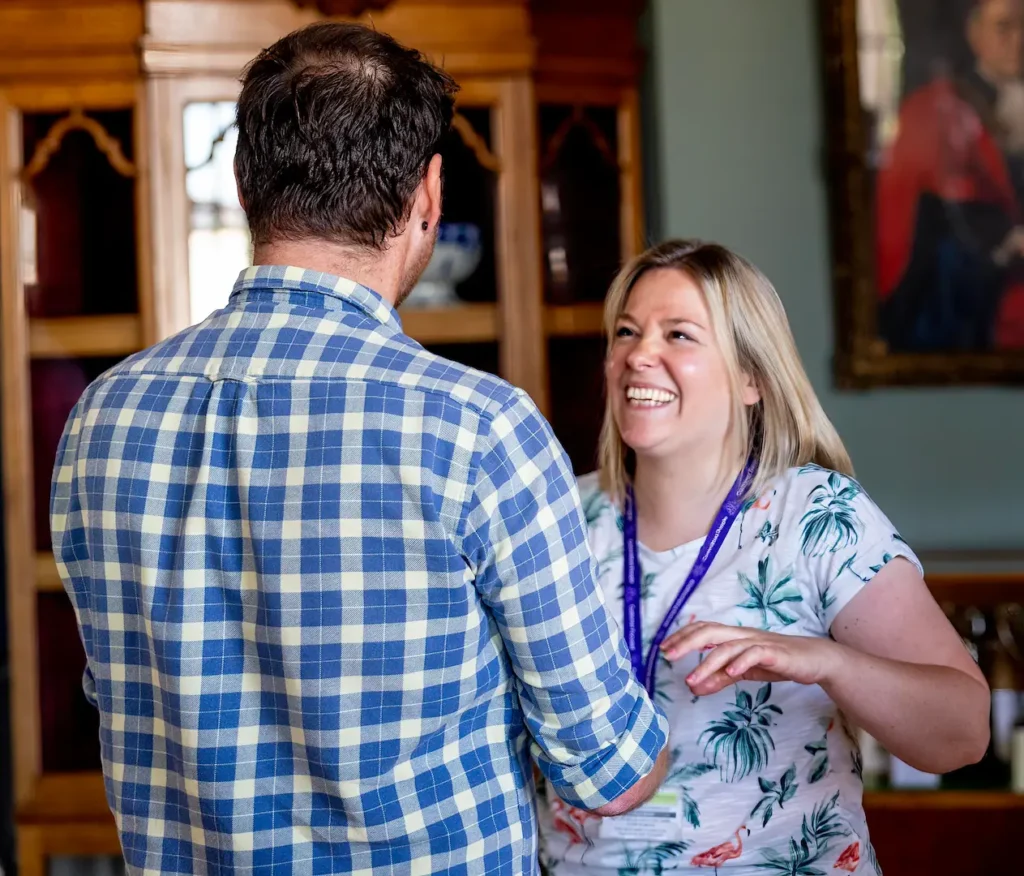
Wymondham Town Council asked Stand2 to train its team. That covered office staff, groundsmen and tourist information assistants who often work alone. Several staff work part time, so the session was built as a half-day course delivered in the council chamber, around the situations each role faces: complaints at the front desk, encounters on open spaces, and lone working at the tourist information point.
Training built around your council’s buildings, roles and residents.
Delivery: Delivered face to face at your council offices, using realistic scenarios from council work: the counter, phone lines, parks and public meetings. StandPoint gives staff access to resources after the course.
Assessment: Through observation, participation and practical demonstration. No written exams.
Certification: Every delegate receives a uniquely numbered Stand2 certificate and is added to the Stand2 Training Register, giving you a clear record of who has been trained and when refreshers are due.
Training environment: Trauma-informed, with clear opt-outs. Physical elements are low-risk and suitable for all ages and fitness levels.
This course is for councils of every size, from town and parish councils to district, borough and county councils, whose staff deal with challenging members of the public.


Is this course about conflict with the public or between staff?
Does this course include physical intervention?
What is the difference between this course and Level 1?
Is conflict management training a legal requirement for council staff?
Is this suitable for town and parish councils as well as larger councils?


How many staff can attend each session?
Does Stand2 training come with a certificate?
Can the training be delivered in our council building?
Can we get a quote for committee approval?
How soon can you deliver?
How often should staff refresh this training?
Can’t find what you’re looking for? Get in touch and we’ll get back to you as soon as possible.
If you’re responsible for staff safety, operational risk, or service delivery, we can help.
"*" indicates required fields