

























































Level 05 – Advanced Specialist Skills

Handcuffing & Soft Restraints Training

A specialist module for authorised teams who may need to use restrictive equipment as part of a controlled, lawful, and proportionate response.

Duration 4 Hours
Delivery Methods
  • In person
  • Standpoint
  • Affiliate Trainer Programme
Assessments
  • OBSERVATION
  • PARTICIPATION
  • SUPERVISED PRACTICAL DEMONSTRATION
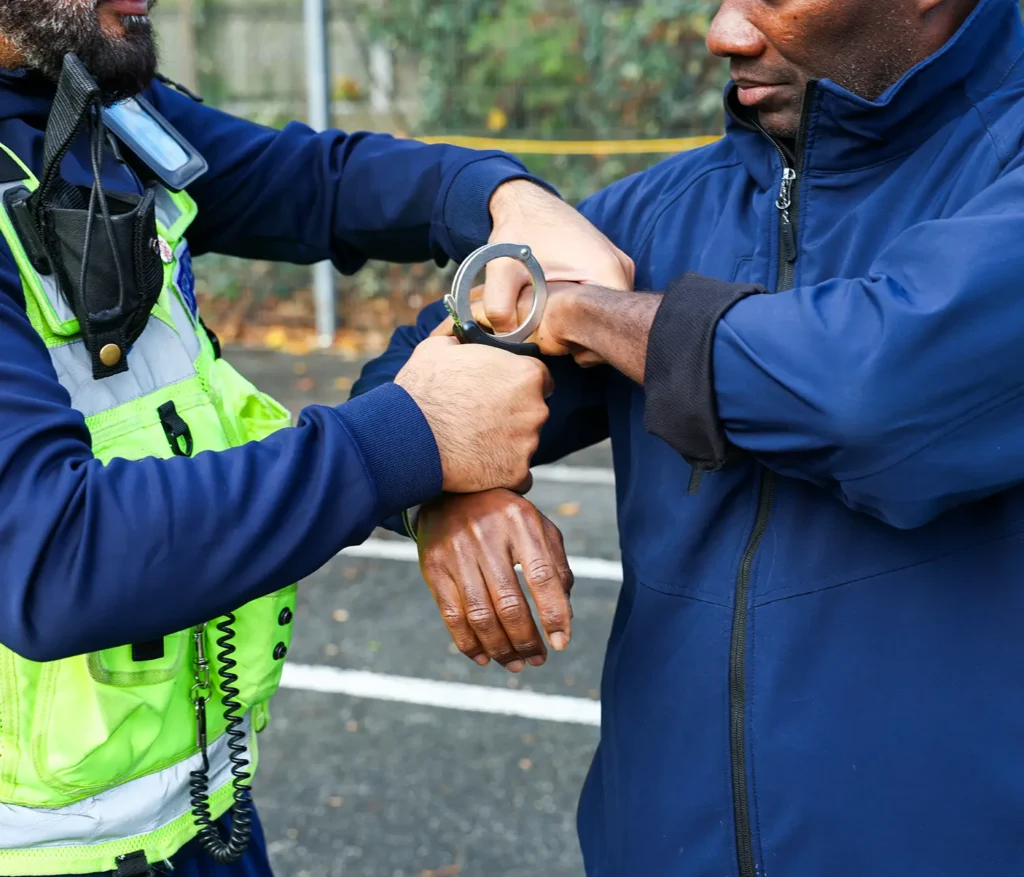
A law enforcement officer in a high-visibility vest applying handcuffs to a person's wrists outdoors

•01COURSE OVERVIEW

Safe, lawful restraint, taught in context.

Staff learn the risk assessment, communication and de-escalation that minimise the need for equipment, and the safe application, monitoring and removal of handcuffs or soft restraints.

It’s for staff authorised, or being considered for authorisation, to use restraints, with a strong focus on dignity, accountability and knowing when not to use them.

• 02 THE IMPACT

How this training helps your organisation

  • Equipment used only when necessary and proportionate
  • Less risk of injury and medical complications
  • Clear decisions and documentation that hold up
  • Better team coordination under pressure
  • Compliance with your policy and audit requirements
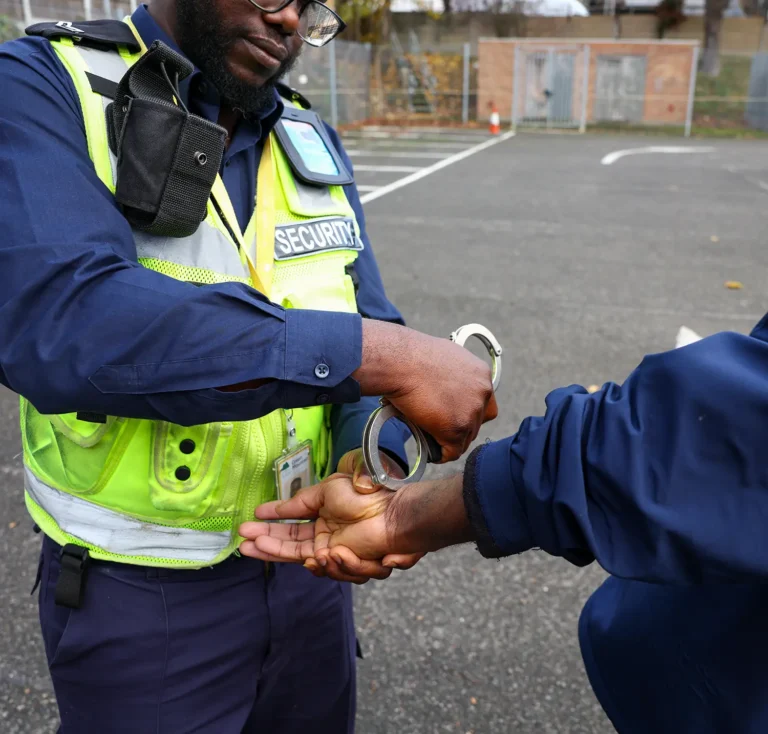
Officer using a key to unlock handcuffs on a person's wrists, with a supervisor in a high-visibility vest nearby

•03.RISKS ADDRESSED

Used incorrectly, restraints cause harm. Untrained staff may:

Checklist icon Apply devices incorrectly and cause injury
Checklist icon Use restraints without a lawful justification
Checklist icon Restrain when it isn’t proportionate
Checklist icon Keep records that don’t reflect what happened
Checklist icon Coordinate poorly as a team during application

The good news? It’s entirely preventable.

• 04 LEARNING OUTCOMES

What staff will learn.

Explain the legal, ethical, and organisational frameworks governing the use of handcuffs and soft restraints.

• 04 LEARNING OUTCOMES

What staff will learn.

  1. 01 Explain the legal, ethical, and organisational frameworks governing the use of handcuffs and soft restraints.
  2. 02 Identify the risks associated with restrictive equipment, including medical, positional, and situational factors.
  3. 03 Apply structured communication and de-escalation strategies to reduce the likelihood of needing restrictive equipment.
  4. 04 Conduct dynamic risk assessments to determine whether the use of restraints is necessary, proportionate, and defensible.
  5. 05 Contribute to safe, coordinated team responses that prioritise dignity, safety, and least restrictive practice.
  6. 06 Work effectively with colleagues and partner agencies during restraint and handover situations.
  7. 07 Demonstrate the principles of safe application, monitoring, and removal of handcuffs and soft restraints in line with training and policy.
  8. 08 Recognise signs of distress, medical compromise, or elevated risk during restraint and take appropriate action.
  9. 09 Maintain professional composure, clear communication, and ethical decision-making throughout incidents.
  10. 10 Manage and reduce risk.
  11. 11 Follow organisational procedures for reporting, review, and safeguarding following any use of restrictive equipment.
  12. 12 Reflect on their own practice and identify opportunities for continuous improvement in the safe use of restrictive equipment.
  13. 13 Typical refresher intervals for this course are 12 months, depending on operational risk and organisational requirements.
05 CASE STUDY

Data centre security teams

Stand2 supports security teams responsible for safeguarding mission-critical data centre environments, where uptime, continuity, and asset protection are of  national and commercial significance. We work with organisations seeking the highest quality training available for their teams operating in controlled spaces  with strict access protocols, where incidents must be managed quickly,  proportionately, and lawfully. 

Training is centred on least restrictive practice, safe application principles, and  robust documentation. As a result, teams report clearer decision-making,  improved coordination, and enhanced defensibility when the use of restrictive  equipment is authorised.

Application of first cuff
• 06 Course Delivery & Assessment

Practical, legally grounded restraint training.

Delivery: In person, combining legal and policy grounding with hands-on practice, taught by operationally experienced trainers and tailored to the devices and authorisation framework your organisation uses.

Assessment: Practical demonstration, scenarios and questioning, covering both correct technique and the legal knowledge behind every use.

Certification: Every successful participant receives a uniquely numbered Stand2 certificate for the devices covered and is added to the Stand2 Training Register, so you know who is trained on which equipment.

Training environment: Closely supervised and consent-led. No one is asked to do anything they’re uncomfortable with.

•07.Frequently asked questions

Handcuffing & soft restraints: your questions answered

Do you train with specific devices or is it generic?
Stand2 trains with the specific devices your organisation uses and has authorised. We do not deliver generic handcuffing or restraint training – every module is tailored to the equipment your staff are authorised to carry and the operational context in which they work.
What legal framework does the training cover?
The training covers the legal basis for use of force and restraint under relevant UK legislation, including the Human Rights Act 1998, the Mental Health Act 1983 (and its Code of Practice), and sector-specific guidance where applicable. Staff will understand not just how to use devices correctly, but when use is lawful, proportionate, and justifiable.
Who is this training designed for?
This training is for staff who are authorised – or being considered for authorisation – to use handcuffs or soft restraints as part of their operational role. This includes custody staff, security personnel, mental health and learning disability teams, and other specialist roles. It is not suitable as a general conflict management module.
Can the training be integrated with our existing Level 3 programme?
Yes. Handcuffing and Soft Restraints training can be integrated into the annual Level 3 refresher cycle or delivered as a standalone specialist module, depending on your organisation’s requirements and authorisation structure.
What happens if a member of staff fails the assessment?
Any staff member who does not meet the required standard will not be certified. Stand2 will provide clear written feedback to the organisation and can arrange remedial training where appropriate. Uncertified staff should not use the relevant devices until they have successfully completed reassessment.
How often does this training need to be refreshed?
Annual refresher training is the standard recommended by Stand2 and aligned with best practice across most sectors. Organisations should also ensure refresher training is triggered following any significant incident, policy change, or change in authorised equipment.
How do you maintain a safe training environment for practical elements?
All practical elements are delivered in a controlled environment with close supervision throughout. Physical and psychological safety are prioritised at every stage, with clear briefing, consent, and opt-out options in place. No participant is placed in a position that causes unnecessary discomfort or risk.
Does Stand2 training come with a certificate?
Yes. Every participant who successfully completes the module is formally certified by Stand2 and issued with a uniquely numbered completion certificate. Each delegate is also entered onto the Stand2 Training Register, which we maintain on your behalf – providing your organisation with a clear, auditable record of who is trained and currently certified.
•08.Start the conversation

Let’s talk about training your team.

For teams authorised to use restraint equipment as part of a lawful, proportionate response. Tell us about your team and we’ll recommend the right approach.

"*" indicates required fields

It helps to know your sector, roughly how many staff, and the kinds of situations they face – but as much or as little as you like.
We do not use your personal information for any reason other than to contact you back. You can find our privacy policy by clicking here.
Google Reviews

At Stand2 we go above and beyond to understand and meet your expectations. Here are some of our recent reviews.

As the trusted leader in conflict management, personal safety, and physical intervention training, we aim to elevate standards across the UK and beyond by bringing evidence-based practice, operational credibility, and expert instruction to every sector we serve.
View All Reviews
Great session on conflict resolution. Session was informative and helpful for managing situations of conflict. Would highly recommend.

Brilliant course! Instructors (Steve and Dave) friendly and knowledgeable, made everyone feel really comfortable. Wonderful overall experience and know have a better knowledge of conflict resolution techniques.

Good training, helpful for increasing awareness of threats and process for justifying and processing conflict resolution.

Great experience practical elements really helped consolidate my knowledge.

The instructors were very knowledgeable, approachable and supportive. Great and informative session, thank you!


Excellent delivery, really informative & engaging, cannot fault the whole package. Thank you

Great training and was delivered to a high standard. Paul was very friendly and made me feel at ease

Very useful in practical life, specifically in my workplace.