
Level 03 – Physical Intervention
Advanced Conflict Management & Physical Intervention Training

A comprehensive programme for staff who may need to use physical intervention as a last resort to prevent harm. Designed to strengthen decision-making, risk awareness, and safe, proportionate physical skills aligned with legal, ethical, and organisational standards.
- In person
- Standpoint
- Affiliate Trainer Programme
- OBSERVATION
- PARTICIPATION
- SUPERVISED PRACTICAL DEMONSTRATION
- FORMATIVE ASSESSMENT
•01COURSE OVERVIEW
Providing staff with the knowledge, judgement, and practical capability to prevent, manage, and safely resolve physical conflict – as a last resort, within a clear legal and ethical framework.
Participants explore the legal, ethical, and organisational frameworks that govern physical intervention, develop confident communication and de-escalation skills, and learn a medically reviewed set of safe, non-harmful physical responses used only when necessary and proportionate. The course reinforces risk awareness, teamwork, and post-incident responsibilities, ensuring staff can act decisively while maintaining dignity, safety, and defensible practice throughout.
This programme is accredited and independently medically reviewed by a consultant in emergency medicine – ensuring every technique taught is safe, proportionate, and clinically defensible.
How this training helps your organisation
-
More confident, consistent responses to higher risk behaviour
-
Reduced injuries and safer management of incidents
-
Improved legal and professional defensibility during and after incidents
-
Clearer team communication and coordination under pressure
-
Stronger adherence to organisational policies and least restrictive practice
-
Better incident reporting, supporting governance, safeguarding, and improvement
•03.RISKS ADDRESSED
Where physical intervention may be necessary, the cost of poor training is too high to ignore. Without the right training, your staff may:
The good news is that this is entirely preventable. That’s what this course is for.
Here’s what your staff will be able to do differently:
- 01 Recognise and manage the three types of risk.
- 02 Identify risks associated with physical intervention, including medical, positional, and situational risks.
- 03 Explain the legal, ethical, and organisational principles governing physical intervention.
- 04 Recognise their duty of care and professional responsibilities.
- 05 Demonstrate situational awareness and early warning recognition to prevent escalation.
- 06 Use verbal and nonverbal communication strategies to defuse tension and reduce the need for physical intervention.
- 07 Describe the hierarchy of responses, emphasising prevention, deescalation, and last resort physical contact.
- 08 Apply decision-making models to choose the safest and most proportionate response.
- 09 Demonstrate self-control, emotional regulation, and professional behaviour under pressure.
- 10 Recognise personal limits and seek support when required.
- 11 Demonstrate safe, non-harmful physical skills designed to reduce risk and increase safety for all parties.
- 12 Apply safe positioning, movement, and team coordination principles to minimise harm.
- 13 Work effectively as part of a team with colleagues and external services.
- 14 Demonstrate safe and effective management of bystanders during high risk incidents
- 15 Transition away from physical contact as soon as it is safe and appropriate.
- 16 Describe and follow organisational procedures for incident reporting and review.
- 17 Contribute to post incident debriefs that prioritise dignity, safety, and continuous improvement.
- 18 Reflect on incidents to identify learning, reduce recurrence, and support staff wellbeing.
- 19 Apply the programme’s principles consistently across different environments and service users.
Festival Place – Security and Customer Safety Teams
Festival Place is a leading shopping and leisure destination in Basingstoke, home to over 140 retailers, more than 20 restaurants, and a 10-screen cinema. The centre combines visible, proactive security with discreet, covert safety measures to ensure a calm, safe environment for millions of visitors each year.Â
Stand2 delivered Advanced Conflict Management & Physical Intervention training to strengthen the centre’s already well-established commitment to safety. The programme ensured that Festival Place staff are among the best equipped in the sector to prevent escalation, make defensible decisions under pressure, and apply safe, medically reviewed physical intervention only when necessary.Â
Staff reported increased confidence, clearer communication during challenging incidents, and improved coordination when working as a team. The training supported Festival Place’s ongoing commitment to providing a safe, reassuring experience for shoppers, visitors, and employees across this large and diverse environment.
Two days of structured, medically reviewed training – built around the specific risks your staff face.
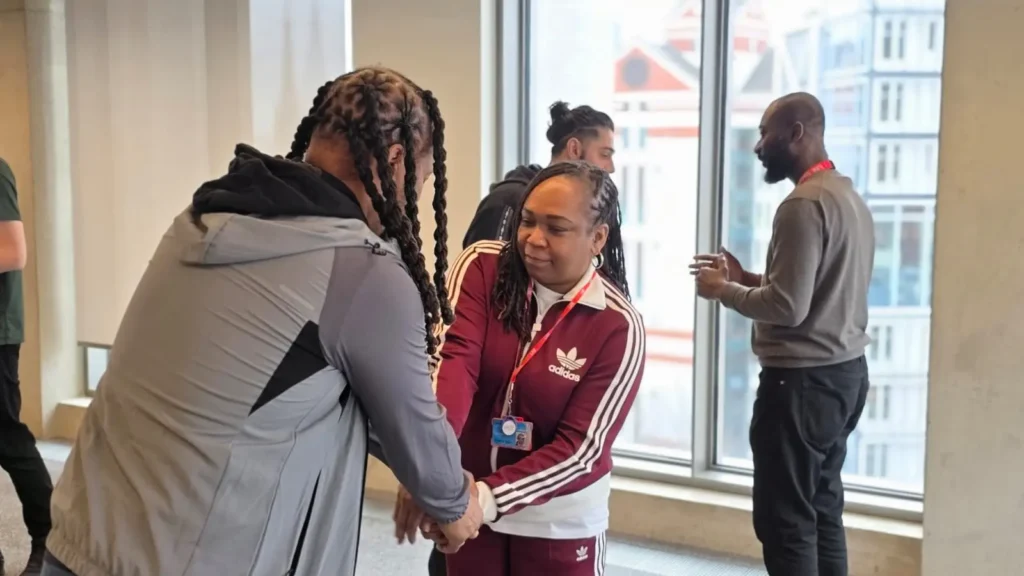
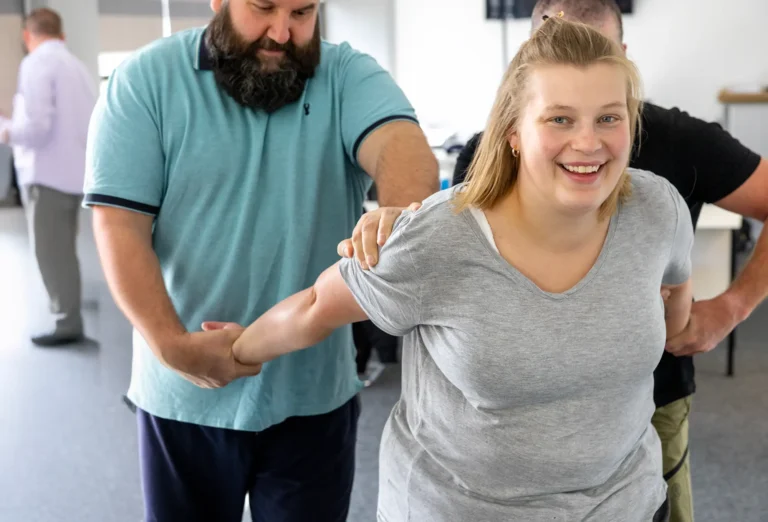
Delivery: This two-day programme is delivered in person through structured theoretical input, scenario-based exercises, supervised physical skills practice, and reflective discussion. Every programme is preceded by a Training Needs Analysis to ensure the content, scenarios, and physical skills are directly relevant to your environment, policies, and operational requirements. StandPoint, our online learning platform, supports the programme with additional resources and materials.

Medical review and accreditation: All physical techniques taught on this programme are independently medically reviewed by a consultant in emergency medicine and fully risk assessed by a NEBOSH-qualified practitioner. The programme is accredited, and this level of independent medical oversight is not standard across the physical intervention training sector – it is Stand2’s commitment to ensuring that every technique is safe, proportionate, and clinically defensible before it is ever taught to a delegate.
Assessment: Learning is assessed through observation, participation, and supervised demonstration of techniques. Assessment is continuous and practical – based on how staff apply what they’ve learned in realistic, controlled conditions.
Certification: Every participant who successfully completes the programme is formally certified by Stand2, receiving a uniquely numbered certificate that confirms they have met the programme’s assessed standards. Each delegate is entered onto the Stand2 Training Register, which we maintain on your behalf – giving your organisation a clear, auditable record of who has been trained and when annual refresher training is due.


Training environment: Psychological and physical safety are prioritised throughout. All sessions are delivered with clear consent, trauma-informed facilitation, close supervision, and robust safety protocols. No participant is asked to take part in any activity they are uncomfortable with.

Can’t find what you’re looking for? Call us or drop us a message.
Is this course suitable for staff with no prior physical intervention training?
Are any pain-based techniques taught?
Are the physical intervention techniques medically safe?
Is physical intervention training a legal requirement?

What is a Training Needs Analysis and why is it required?

What sectors is this course suitable for?
How does this training support legal and professional defensibility?

Does Stand2 training come with a certificate?

How do you ensure psychological and physical safety during training?

How often should staff refresh this training?
This course is ideal for organisations whose staff may need to use safe, proportionate physical intervention to prevent harm.
If you’re responsible for staff safety, safeguarding, or operational risk, we can help.
"*" indicates required fields